Proudly serving Phoenix, Glendale, Scottsdale, Tempe, Mesa, Chandler & surrounding areasCall or Text 24/7: 480-243-9053

Washer Repair, Maintenance & Troubleshooting in Phoenix, AZ for All Major Laundry Systems

Phoenix Appliance Repair Co. provides washer repair for households and businesses throughout Phoenix. We diagnose front-load, top-load, high-efficiency, direct-drive, belt-drive, and smart washing machines. Our broader appliance service also covers dryers, refrigerators, dishwashers, ovens, stove ranges, freezers, microwaves, ice makers, and garbage disposals.

Phoenix water from the Salt River Project and Central Arizona Project canal system can leave mineral scale inside inlet valves, hoses, and gaskets. Garage laundry rooms can exceed 120°F during summer, adding stress to control boards, door seals, and belts. We test amperage draw, drain time, and spin-cycle RPM before recommending a repair, so the quote begins with measured findings rather than a guessed part.

Technicians use OEM parts, factory service documentation, and NFPA 70 electrical safety practices for washer wiring and control-board work. Our team also holds EPA Section 608 certification for refrigerant service on refrigerators and freezers, and we explain the diagnosed fault before discussing price.

Phoenix Appliance Repair Co. provides washer repair across Phoenix and the greater Valley, including Scottsdale, Tempe, Mesa, Glendale, Chandler, and Peoria.

★ ★ ★ ★ ★4.9/5 Average Rating · 20+ Years of Experience · Thousands of Customers Helped · Licensed & Insured · Residential & Commercial

Phoenix Washer Repair Options & Benefits

What Does Washer Repair Cover?

Washer repair starts by identifying the failing system rather than guessing at a replacement part. We service drive belts, motor couplers, drain pumps, hoses, door seals, tub bearings, suspension components, inlet valves, timers, sensors, and control boards.

Different washer designs require different tests. Direct-drive and belt-drive machines distribute wear differently, while smart models may provide error codes and control-board diagnostic data that help separate electrical, mechanical, and sensor faults.

Every repair is performed at your property from a service vehicle equipped for common washer faults. After testing, the technician provides a written explanation of the problem and the available repair options.

Benefits of a Test-First Repair Visit

A structured diagnostic visit narrows the fault before parts are ordered or installed. That gives you a clearer decision, helps avoid unnecessary part swaps, and keeps the repair focused on the washer's actual symptoms.

  • Amperage, drain-time, and spin-RPM testing
  • Brand-specific factory service procedures
  • On-site service with no washer hauling
  • Common belts, hoses, pumps, and inlet valves carried
  • Clear, itemized quote before repair work starts
  • Priority scheduling for active leak calls
  • Repair-versus-replacement guidance
  • NFPA 70 practices for wiring and controls
Phoenix Washer Repair Services

Washer Problems We Repair

Across Phoenix's roughly 517.9 square miles, including Ahwatukee and Desert Ridge, washer trouble often begins with a small symptom such as a hum, slow drain, puddle, or off-balance load. We trace those symptoms to the mechanical, electrical, or water-handling component responsible.

Washer Spin and Drive Repair

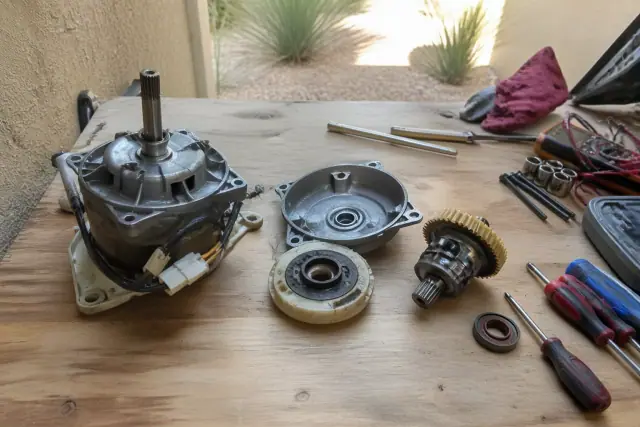
Washer spin drive mechanical assembly being repaired on a workbench in Phoenix, AZ.

A drum that hums but will not spin may have a worn belt, failed motor coupler, clutch problem, or control board that is not sending the spin command. We inspect the motor and clutch on direct-drive models and visually check the belt on belt-drive units before recommending motor, coupler, clutch, or belt service.

Request Estimate

Washer Leak and Seal Repair

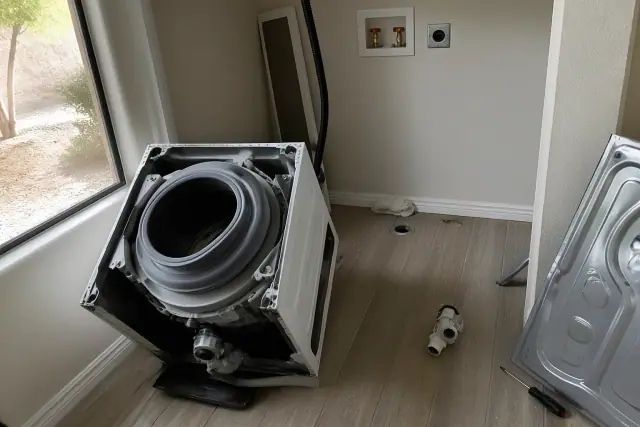
A disassembled washing machine being repaired in a Phoenix, AZ laundry alcove.

Front-load leaks often come from a worn door boot or gasket, while top-load leaks may point to a hose fitting or tub seal. We locate the leak path, inspect rubber for mineral-related drying, and repair the failed seal, gasket, fitting, or hose rather than treating only the visible puddle.

Request Estimate

Drain Pump and Hose Repair

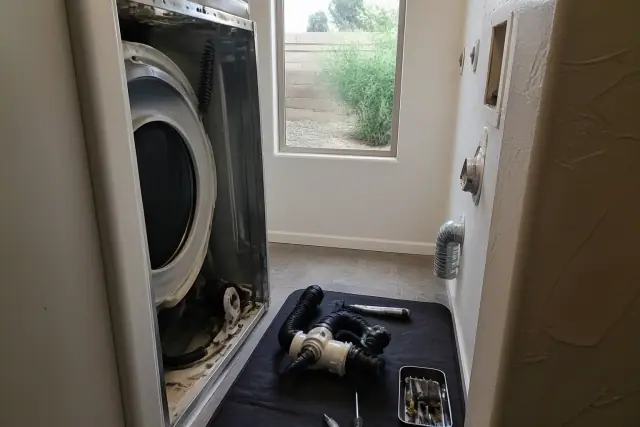
Technician repairing a washer drain pump and hoses on a work mat in a Phoenix, AZ laundry closet.

A clogged drain pump, kinked hose, or coin trapped in the pump housing can leave water in the drum. We clear the pump, inspect the impeller for wear, and replace a drain hose when it has become brittle or cracked.

Request Estimate

Noise, Bearing, and Suspension Repair

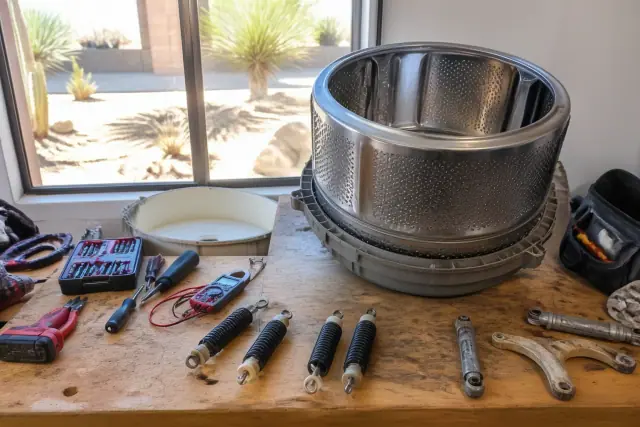
Disassembled washing machine parts and suspension springs on a workbench during a repair in Phoenix, AZ.

Thumping can indicate worn tub bearings or a failed suspension spring, while a high-pitched squeal often points to a motor bearing or belt. We isolate when the sound occurs during the cycle, then inspect leveling, suspension, bearings, and drive components.

Request Estimate

Control Board, Timer, and Sensor Repair

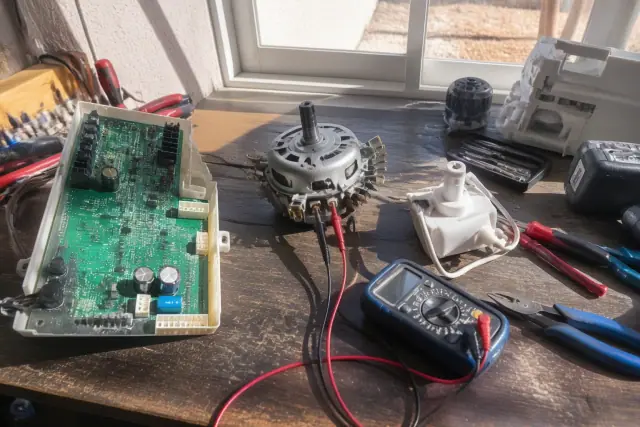
Technician repairing a washer control board, timer, and sensor on a workbench in Phoenix, AZ.

Unresponsive panels, incorrect cycle behavior, and recurring fault codes can involve the control board, timer, door lock switch, pressure sensor, or related wiring. We compare displayed codes with brand service information and test the circuit before replacing an electronic component.

Request Estimate

Agitator, Transmission, and Inlet Valve Repair

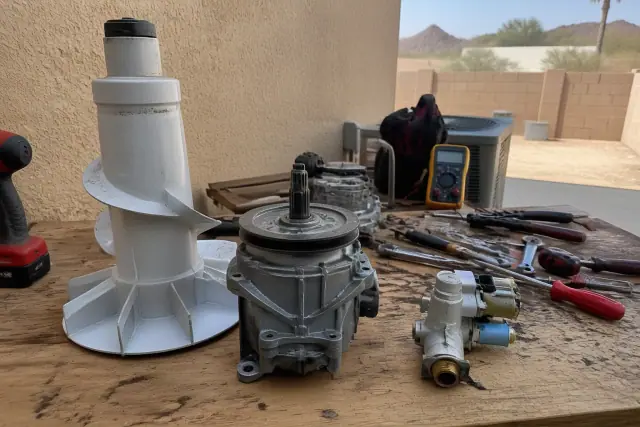
Disassembled washing machine agitator, transmission, and inlet valve on a workshop workbench in Phoenix, AZ.

Older agitator washers may need agitator or transmission service, while slow filling and incorrect water levels can point to an inlet valve. We inspect these load-moving and water-entry components alongside the machine's suspension and controls to confirm the source of the symptom.

Request Estimate
Brand-Specific Washer Service

Washer Brands & Machine Types

Major washer platforms use different motor designs, control modules, fault codes, and repair procedures. Our diagnostic approach accounts for the manufacturer's design as well as whether the machine is front-load, top-load, high-efficiency, direct-drive, or connected.

Whirlpool washer repair in a utility room with tools visible in Phoenix, AZ.

Whirlpool Washer Repair

Whirlpool direct-drive assemblies and proprietary control modules require platform-specific checks. We service both front-load and top-load Whirlpool machines using the appropriate component and filter procedures.

  • Direct-drive motor and coupler diagnosis
  • Door boot and seal replacement
  • Drain pump filter cleaning
  • Agitator and transmission service
  • Common drive components carried for single-visit repairs
Request Estimate
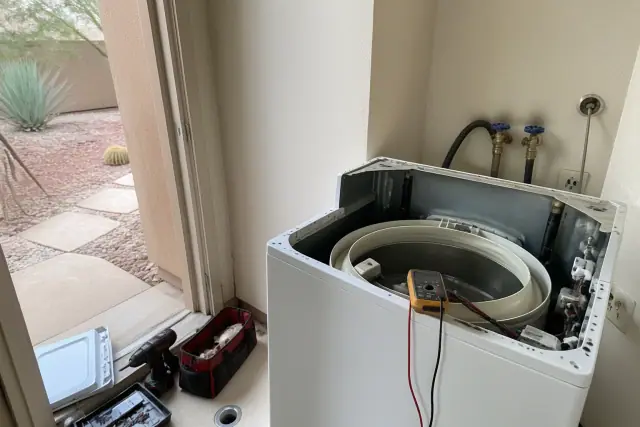
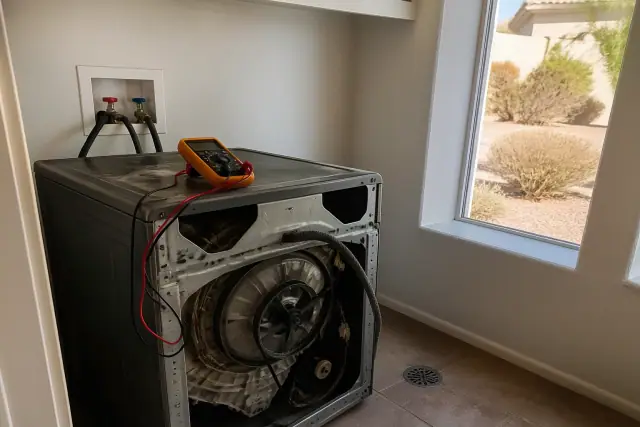
LG washer undergoing repair with a multimeter and exposed hoses in a Phoenix, AZ utility room.

LG Washer Repair

LG direct-drive inverter motors and touch-panel controls call for different diagnostic references than legacy mechanical washers. On connected models, stored control-board data can help distinguish electrical, mechanical, and sensor problems.

  • Direct-drive inverter motor testing
  • LG-specific error code review
  • Drain pump obstruction checks
  • Door lock switch assembly testing
  • Pressure sensor and control-board diagnostics
Request Estimate
Samsung washer undergoing repair in a laundry closet in Phoenix, AZ.

Samsung Washer Repair

Samsung digital inverter motors and vibration-reduction designs make accurate leveling and bearing inspection important during drum and suspension work. Displayed fault codes are checked against service bulletins before control-board repair is quoted.

  • Digital inverter motor diagnosis
  • Vibration and leveling correction
  • Drum and bearing inspection
  • Drain pump and door lock actuator service
  • Fault-code and service-bulletin review
Request Estimate
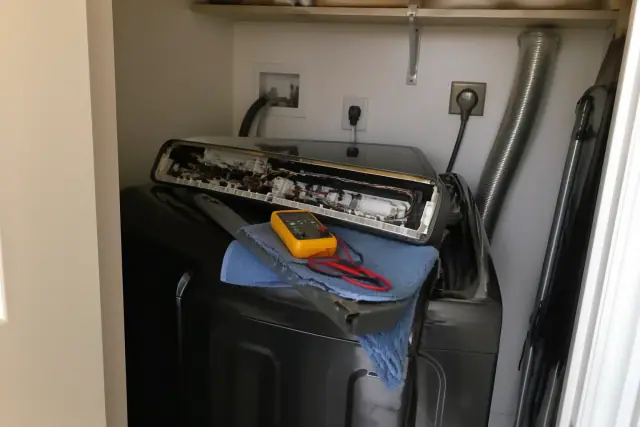
Technician repairing a Maytag washing machine in a Phoenix, AZ utility room with diagnostic tools.

Maytag Washer Repair

Maytag washers include residential machines as well as commercial-grade units used in apartment complexes and laundromats. We service the heavy-use pump, bearing, timer, and water-entry components that can interrupt those frequent laundry cycles.

  • Residential front-load washer repair
  • Residential top-load washer repair
  • Commercial-grade pump service
  • Tub bearing diagnosis
  • Timer and inlet valve repair
Request Estimate
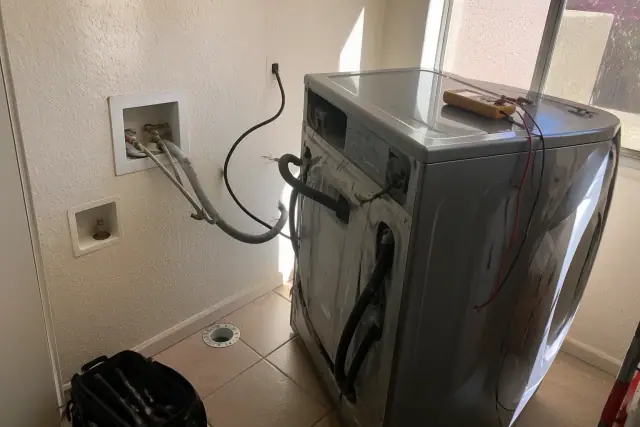
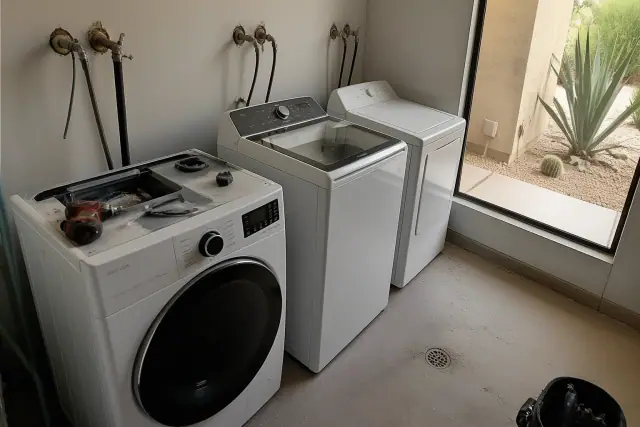
Utility room in Phoenix, AZ featuring wall-mounted water valves, a floor drain, and various laundry machines.

Front-Load, Top-Load, and HE Washers

Washer layout changes which parts carry the most load and which maintenance points matter. We account for the door-seal and drain path on front-load machines, the transmission and suspension on top-load units, and residue behavior in high-efficiency systems.

  • Front-load door boot, pump, and bearing service
  • Top-load transmission, agitator, and suspension service
  • Direct-drive motor coupler checks
  • Door seal inspection every 12 to 18 months
  • Monthly hot-water cleaning cycle for HE machines
Request Estimate
Finding Your Right Fit

Choosing the Right Washer Repair Approach

Phoenix market estimates put general appliance repair at around $65, with a typical range of $45 to $120 depending on the issue and parts. For a washer under about 10 years old, a single-component repair is often worth considering when the quote remains below roughly half the cost of a comparable new machine. We compare the diagnosed fault, part cost, washer age, and repair history before recommending repair or replacement.

Measured Washer Diagnostics

Amperage draw, drain time, and spin-cycle RPM provide concrete evidence about the electrical, water-handling, and drive systems. We pair those readings with visual inspection and brand fault information before quoting a component.

Manufacturer-Aligned Repairs

Technicians train on major appliance platforms and follow manufacturer repair procedures instead of generic workarounds. OEM parts and quality aftermarket parts are selected according to the repair, with factory documentation guiding model-specific control, motor, and sensor work.

Clear Quotes and Guidance

You receive a clear, itemized quote before repair work starts. If the fault, age, or repair history makes replacement more sensible, we walk through that comparison instead of pushing a repair that does not make financial sense.

What Sets Us Apart

Why Choose Us for Phoenix Washer Repair?

Our process combines local washer-failure experience with model-specific documentation and measured testing. Common parts on the service vehicle help many belt, hose, pump, and inlet-valve repairs finish in a single visit, while a special-order control board may require a follow-up. Request an on-site diagnosis to get a clear explanation and quote before authorizing work.

Get a Free Estimate

Washer Not Spinning

A worn drive belt, failed motor coupler, clutch problem, motor fault, or control-board command can stop the drum. The machine's drive design determines which components we check first.

Washer Leaking Water

Door seals, gaskets, hose fittings, and tub seals are common leak points. Active leaks are prioritized because water from an overflowing washer can quickly damage flooring and drywall, especially near an upstairs laundry closet.

Washer Will Not Drain

Standing water may result from a clogged pump, kinked hose, trapped coin, or worn impeller. We inspect the full drain path and the pump housing before deciding whether clearing or replacement is needed.

Washer Noise and Vibration

Thumping, squealing, or excessive vibration can trace to bearings, suspension springs, a drive belt, the motor, or incorrect leveling. The cycle stage and sound character help narrow the inspection.

Control and Sensor Faults

Door-lock errors, drain codes, unresponsive touch panels, and incorrect water levels can involve switches, sensors, wiring, or the main control board. We test those inputs before quoting an electronic part.

Hard Water and Heat Stress

Phoenix mineral buildup can restrict inlet valves and drain paths while drying rubber gaskets. High garage temperatures can also stress electronics, glaze belts, and accelerate door-seal deterioration, so we inspect for local wear conditions alongside the immediate fault.

How it works

Our Washer Repair Process

The visit moves from the reported symptom to visual, electrical, and mechanical testing before any part is quoted. You receive an explanation and repair options, then choose whether to authorize the work.

01.

Describe the Washer Symptoms

Tell us whether the washer leaks, hums, stops mid-cycle, fails to drain, displays an error code, or makes noise. The cycle stage and recent changes help focus the first checks.

02.

Visual Washer Inspection

We inspect hoses, seals, the drain path, leveling, visible wiring, and signs of mineral or heat-related wear. This establishes whether the symptom begins with water flow, load movement, or a damaged connection.

03.

Electrical Diagnostics

Amperage draw, wiring, controls, switches, and sensors are tested as the model requires. NFPA 70 safety practices guide work involving washer control boards and electrical connections.

04.

Cycle & Mechanical Testing

We measure drain time and spin-cycle RPM, listen at each cycle stage, and inspect the appropriate motor, belt, coupler, clutch, bearings, or suspension. Brand error codes and service documentation are checked where available.

05.

Itemized Repair Quote

The technician explains the fault and provides a clear quote before work begins. When useful, that explanation includes how the repair cost compares with the washer's age, condition, and replacement value.

06.

Repair & Final Verification

After authorization, we install the appropriate OEM or quality aftermarket component and run the washer through the relevant functions. Common stocked parts may allow completion in one visit; model-specific special orders are handled with a follow-up.

Get Better Service

Schedule Phoenix
Washer
Repair

Request an on-site washer diagnosis for a leak, drain problem, spin failure, unusual noise, or control fault. Phoenix Appliance Repair Co. will test the machine, explain the issue, and provide a quote before repair work begins.

Washer Repair Help

Phoenix Washer Repair FAQs

These answers cover common questions about washer repair costs, timing, machine types, Phoenix wear conditions, and repair-versus-replacement decisions. A diagnosis is still needed to identify the exact component and provide a firm quote.

Call Our Experts

Washer repairs in Phoenix typically range from $150 to $450, depending on the part and labor involved. Inlet-valve or hose repairs often remain under $200, while motor, drum, or control-board work can approach $400 to $500. We provide a firm quote after diagnosis and before repair work starts.

Repair is often worth considering when the washer is under about 10 years old and the fault is limited to a pump, belt, inlet valve, or similar component. A practical rule is to compare the estimate with roughly half the price of a comparable new machine. Age, prior repairs, a tub-seal leak, or a damaged drum can shift the decision toward replacement.

Phoenix technician labor rates generally run from $65 to $125 per hour, although flat-rate repair pricing is common. A diagnostic visit plus a straightforward hose or valve repair often totals about $100 to $250. Motors, drums, and control boards can cost more because both the part and labor requirements increase.

Common Phoenix washer calls involve clogged drain pumps or hoses, worn door seals and gaskets, control-panel faults, suspension wear, and belts or motor couplers that stop the drum from spinning. Mineral buildup makes pump, hose, inlet-valve, and gasket problems especially relevant locally. Front-load machines may also develop odor or mildew around the drum and gasket.

Most washer repairs are completed in one visit lasting one to two hours when the correct part is available. Belt, inlet-valve, and pump replacements often require under an hour of hands-on work. A model-specific control board or other special-order part may require a short follow-up within a few business days.

Consider the washer's age, original value, repair history, and the diagnosed component. Repair usually makes more sense for a single pump, belt, or inlet-valve failure that stays well below half the price of a comparable replacement. Multiple prior repairs, a leaking tub seal, or a drum replacement can make a new washer the more practical choice.

We service major washer platforms, including Whirlpool, LG, Samsung, and Maytag. Brand-specific work may involve direct-drive or inverter motors, proprietary controls, door-lock systems, pressure sensors, drain pumps, or vibration-reduction components. The technician follows the applicable manufacturer procedures and fault information.

Mineral scale can collect in inlet valves, hoses, pump paths, and around gaskets. That buildup may restrict water flow and dry rubber seals, contributing to fill, drain, and leak problems. We look for mineral-related wear during the inspection rather than assuming every symptom has an electrical cause.

A hum without drum movement can point to a worn belt, failed motor coupler, clutch problem, motor fault, or a control board that is not sending the spin command. Direct-drive and belt-drive machines require different first checks. Spin-cycle RPM and drive-component inspection help isolate the fault.

Front-load leaks commonly involve a door boot or gasket, while top-load machines may leak from a hose fitting or tub seal. Mineral deposits can dry rubber and accelerate cracking. Because an active leak can damage flooring and drywall, stop the cycle and arrange an inspection of the leak path.

A clogged drain pump, kinked hose, coin in the pump housing, or worn impeller can leave water in the drum. Diagnosis includes clearing accessible obstructions, checking the impeller, and inspecting the hose for brittle or cracked sections. The pump or hose is replaced only when its condition requires it.

Yes. Front-load machines concentrate wear around the door boot, drain pump, and bearing assembly, while top-load machines place more load on the transmission, agitator, and suspension springs. Direct-drive top-load washers may fail at the motor coupler instead of a belt, so the machine design guides the diagnostic order.

High-efficiency washers use less water, so detergent residue and mineral buildup may remain in pumps and hoses. Run a monthly hot-water cleaning cycle, and inspect a front-load door seal every 12 to 18 months for drying, cracking, or residue. These checks can reduce drain-path, gasket, and odor problems.