Proudly serving Phoenix, Glendale, Scottsdale, Tempe, Mesa, Chandler & surrounding areasCall or Text 24/7: 480-243-9053

Phoenix Appliance Repair Co.: Ice Maker Repair in Phoenix, AZ

Phoenix Appliance Repair Co. provides residential and commercial ice maker repair throughout Phoenix. We service refrigerator-mounted units, standalone freezer ice makers, built-in models, and high-volume commercial machines. Our technicians diagnose water inlet valves, fill tubes, thermistors, module boards, and auger motors before recommending parts. We service all major brands with OEM and OEM-equivalent parts sourced through regional distributors.

Phoenix water from the Salt River Project canals and Central Arizona Project aqueduct often measures 15 to 17 grains per gallon, so mineral scale can narrow fill tubes and foul valves. On a 110-degree June afternoon, lost ice production quickly becomes more than a minor inconvenience. Our EPA Section 608 certified technicians understand sealed-system and refrigerant work as well as the water conditions affecting local equipment. You receive straightforward pricing and clean workmanship after a complete diagnostic.

Stocked service vans carry common inlet valves, control boards, and auger motors, allowing same-day completion in one visit for the majority of appointments. We test before replacing parts, quote the repair, and confirm ice production before leaving.

Phoenix Appliance Repair Co. provides ice maker repair across Phoenix and nearby Scottsdale, Tempe, Mesa, Glendale, Chandler, and Ahwatukee.

★ ★ ★ ★ ★4.9/5 Average Rating · 20+ Years of Experience · Thousands of Customers Helped · Licensed & Insured · Residential & Commercial

Ice Maker Repair Options & Benefits

What Does Ice Maker Repair Cover?

An ice maker combines a water inlet valve, fill tube, temperature sensor, ice mold or auger, module board, and shutoff arm or optical sensor in a compact assembly. A failure in any one of those parts can stop the entire cycle.

Professional diagnosis separates water-supply, temperature, electrical, sensor, board, and motor faults before a part is replaced. Technicians check supply conditions, compare readings with manufacturer specifications, and inspect contacts and wiring for evidence of failure.

Service is available for refrigerator-mounted and standalone freezer units, built-in ice makers connected to dedicated water and drain lines, and high-volume commercial machines. The repair plan reflects the unit type, symptoms, component condition, and whether appliance or plumbing work is involved.

Benefits of Professional Ice Maker Repair

A structured repair visit identifies the failed condition, avoids unnecessary part swaps, and verifies that the complete ice-production cycle works after service.

  • Diagnosis before parts replacement
  • OEM and OEM-equivalent repair parts
  • Service for all major residential brands
  • Same-day completion for the majority of stocked-part jobs
  • On-site service for homes and businesses
  • Manufacturer-spec component testing
  • Honest repair-versus-replacement guidance
  • Final ice-production test before departure
Ice Maker Services

Complete Ice Maker Repair Services

Choose service for the equipment and symptoms at your Phoenix home or business. Each visit starts with diagnosis and ends with a production check rather than a guess at the failed part.

Refrigerator Ice Maker Repair

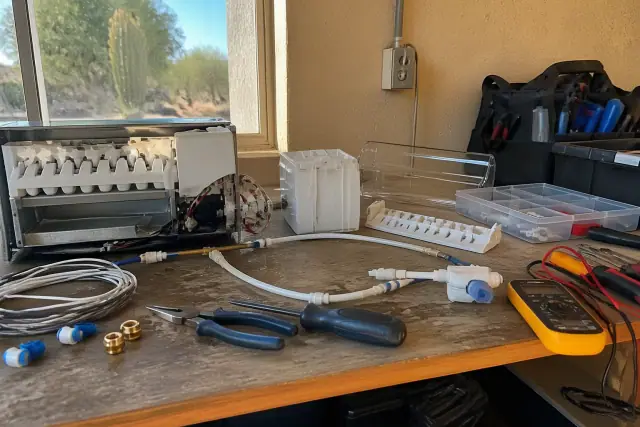
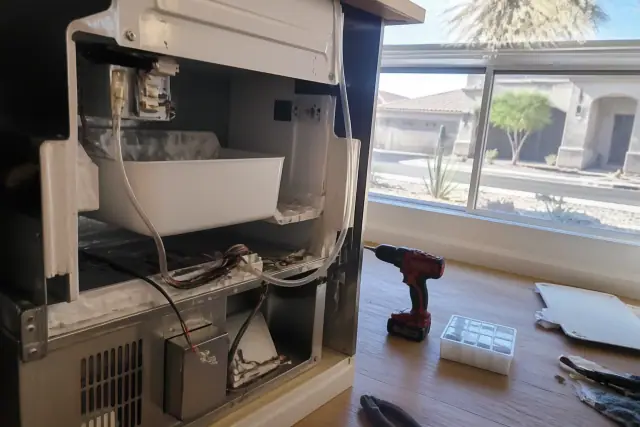
Refrigerator ice maker repair on a wooden workbench with tools and diagnostic equipment in a Phoenix, AZ workshop.

We diagnose refrigerator-mounted ice makers that stop cycling, produce no ice, or make irregular cubes. Service can include testing the inlet valve, fill tube, thermistor, module board, shutoff arm, optical sensor, and door gasket.

Request Estimate

Built-In Ice Maker Repair

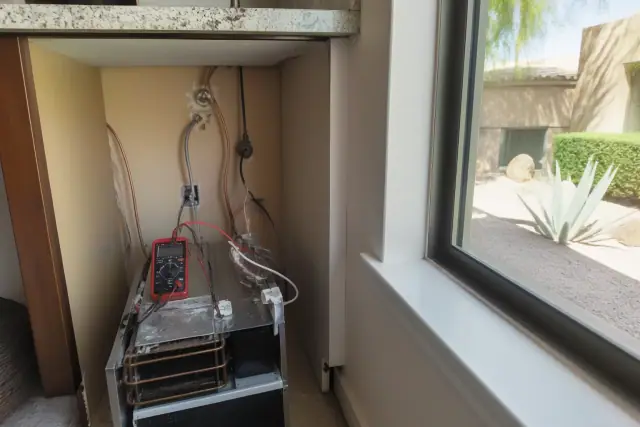
Technician repairing a built-in ice maker with copper water lines and a multimeter in a Phoenix, AZ kitchen.

Built-in units receive separate tests of the fill valve, thermistor, auger motor, dedicated water supply, and drain. If a leak comes from scale, a blockage, or a pinhole in the appliance connection, we identify whether appliance repair is enough or a plumbing referral is needed.

Request Estimate

Freezer Ice Maker Repair

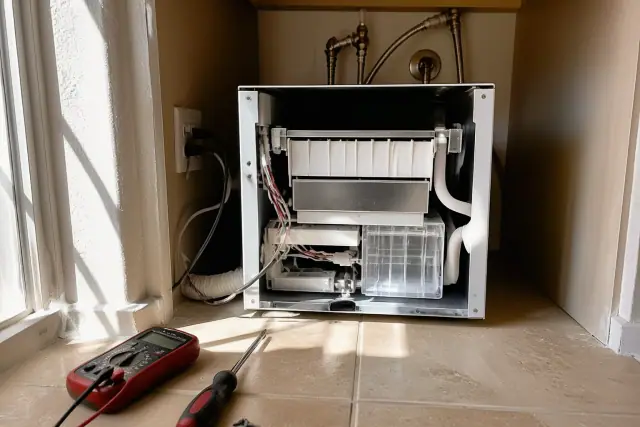
Freezer ice maker repair with tools on the floor in a kitchen in Phoenix, AZ.

Standalone freezer ice maker service checks temperature control, water delivery, the ice mold, module, and shutoff components. The technician corrects the actual component or supply fault and then runs the unit through an ice-making cycle.

Request Estimate

Commercial Ice Machine Repair

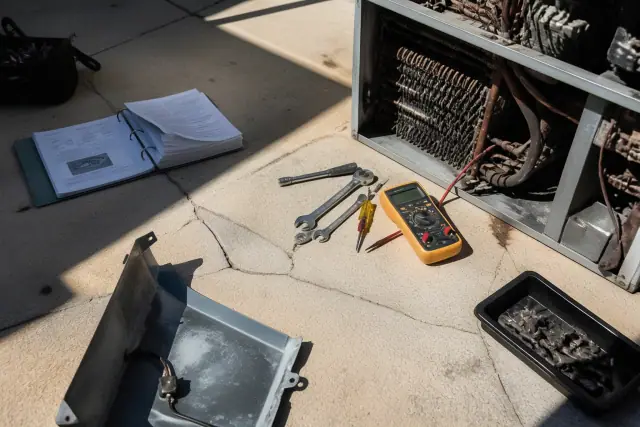
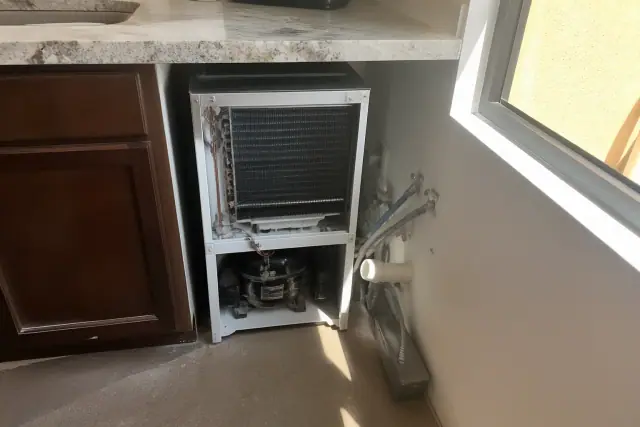
Technician repairing a commercial ice machine with tools and internal cooling coils on a concrete floor in Phoenix, AZ.

Restaurants, medical facilities, and hospitality businesses can request diagnostics and repair for high-volume machines exposed to constant duty cycles. We prioritize scheduling for urgent production loss and use the reported symptoms to prepare likely parts before arrival.

Request Estimate

Ice Maker Diagnostics

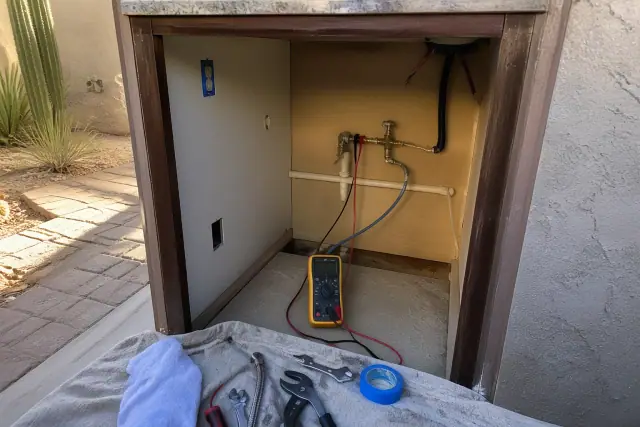
A technician's progress photo of plumbing and electrical diagnostic tools in a Phoenix, AZ kitchen cabinet.

A diagnostic visit checks power, water supply, temperature, pressure, thermostat readings, control contacts, and motor operation in sequence. Testing with a multimeter and manufacturer specifications helps prevent paying for a part that was not causing the failure.

Request Estimate

Scheduled Ice Maker Maintenance

Technician repairing an ice maker with exposed coils in a kitchen in Phoenix, AZ.

Maintenance for residential and commercial equipment can include filter inspection, descaling, condenser-coil cleaning, and production-output testing. Scheduled care is especially useful for high-throughput machines affected by Phoenix mineral scale and dust.

Request Estimate
Ice Maker Types & Maintenance

Ice Maker Service Options

The right service plan depends on how the ice maker is installed, how often it runs, and whether the fault is in the appliance, water connection, or maintenance condition. These options cover the unit types and care needs described in our diagnostic process.

A refrigerator ice maker undergoing repair in a kitchen island in Phoenix, AZ, with a desert view through the window.

Refrigerator-Mounted Ice Makers

Refrigerator-mounted units depend on the freezer temperature, door seal, water valve, fill path, sensor, and control module working together. We isolate which condition interrupted the cycle before discussing a repair.

  • No-ice cycle diagnosis
  • Water inlet valve testing
  • Fill tube and pressure checks
  • Module board and sensor tests
  • Door gasket inspection
Request Estimate
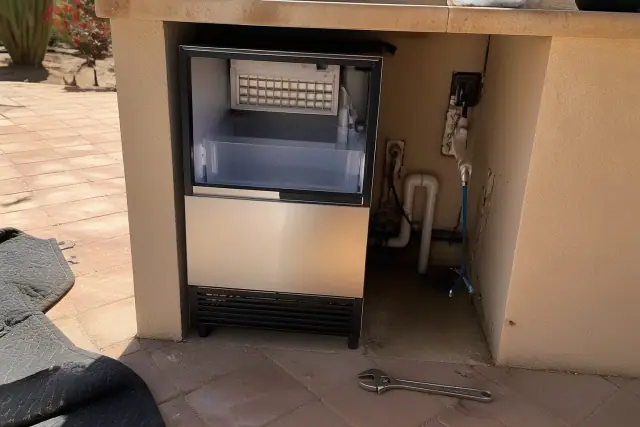
Built-in ice maker being installed in a kitchen cavity with plumbing and tools in Phoenix, AZ.

Built-In Ice Makers

Cabinet-integrated ice makers have a dedicated supply line and drain in addition to internal controls. Accessing the front panel allows each appliance component to be tested independently while the surrounding connections are checked for leaks or blockage.

  • Dedicated water-line inspection
  • Supply and drain leak isolation
  • Fill valve and thermistor tests
  • Auger motor diagnosis
  • Plumbing referral when required
Request Estimate
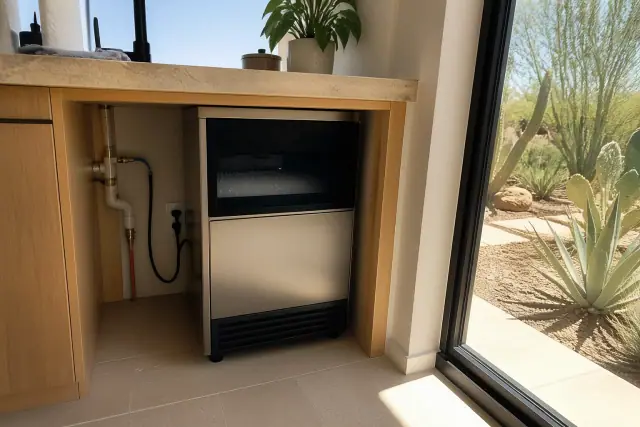
Standalone freezer ice maker installed in a kitchen under-counter cavity in Phoenix, AZ.

Standalone Freezer Ice Makers

A standalone freezer ice maker needs stable temperature, unrestricted water flow, and working mold, control, and shutoff components. The final test verifies that the repaired assembly advances through a complete production cycle.

  • Freezer temperature verification
  • Water supply inspection
  • Ice mold and module testing
  • Shutoff arm or optical sensor checks
  • Final production-cycle test
Request Estimate
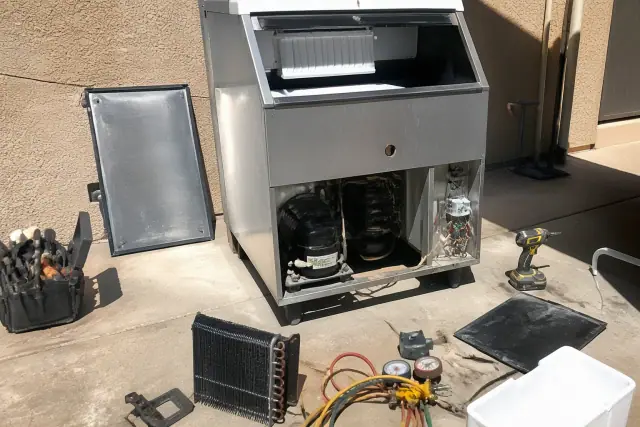
Commercial ice machine repair on a staging floor near a stucco wall in Phoenix, AZ.

Commercial Ice Machines

Commercial machines handle more duty cycles and water throughput than residential units, so component wear and mineral accumulation can progress faster. Diagnostics and scheduled care focus on restoring output and reducing avoidable shutdowns.

  • High-volume machine diagnostics
  • Water filtration inspection
  • Mineral-scale removal
  • Condenser-coil cleaning
  • Production-output testing
Request Estimate
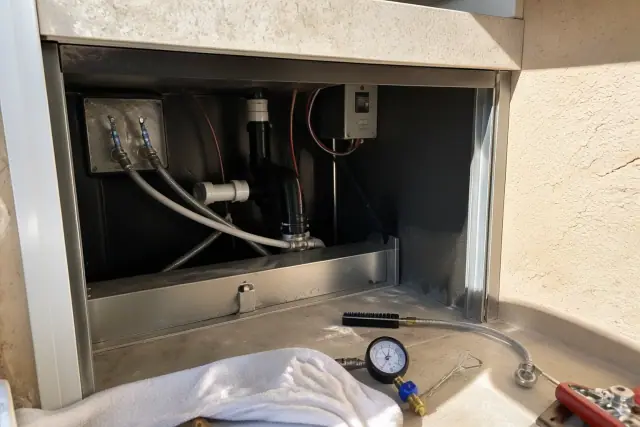
Contractor performing preventive ice maker maintenance with tools in an under-counter space in Phoenix, AZ.

Preventive Ice Maker Maintenance

Routine filter, bin, scale, and coil care helps water move freely and keeps heat-transfer surfaces clear. It is especially important in Phoenix, where hard water affects valves and dry conditions pull dust into appliance intakes.

  • Replace water filters every six months
  • Clean the ice bin quarterly
  • Descale water-contact components regularly
  • Keep condenser coils free of dust
  • Test production output during scheduled visits
Request Estimate
Finding Your Right Fit

Choosing the Right Ice Maker Repair Approach

The practical choice depends on the unit's age, installation, failed component, repair cost, and any remaining manufacturer coverage. We check the model and serial number when coverage may apply, explain when independent repair makes sense, and identify supply-line work that should go to a plumber.

EPA Section 608 Certified Technicians

Our technicians hold EPA Section 608 certification for sealed-system and refrigerant work. They use service manuals and wiring diagrams for major residential brands to test the appliance against its intended specifications.

Diagnosis Before Replacement

We test supply conditions and individual components before replacing anything. That method keeps a frozen fill tube, bad valve, failed control, or stalled motor from turning into an unnecessary series of part swaps.

Phoenix Water and Climate Knowledge

Local hard water accelerates calcium deposits in fill tubes and valves, while dry conditions add dust around condenser coils. We account for both conditions during diagnosis and may recommend inline filtration for homes without softeners to slow scale accumulation.

What Sets Us Apart

Why Choose Us for Ice Maker Repair?

Phoenix Appliance Repair Co. combines major-brand service knowledge with regionally sourced parts, stocked vans, and a repeatable diagnostic sequence. We explain the quote before work begins, use OEM or OEM-equivalent components, and run a final production test after the repair.

Schedule a Diagnostic

No Ice Production

A unit that will not cycle may have a failed inlet valve, module board, thermistor, shutoff arm, or optical sensor. We confirm power, temperature, and water supply before testing those components.

Frozen or Kinked Fill Tubes

A frozen or pinched fill tube prevents water from reaching the ice mold even when the rest of the assembly works. Inspection finds the restriction and checks whether pressure, valve operation, or installation contributed to it.

Mineral Scale in Valves

Calcium deposits from Phoenix hard water can narrow a fill path and interfere with an inlet valve. Cleaning, descaling, filtration guidance, or component replacement depends on how far the buildup has progressed.

Leaks Beneath Built-In Units

Water on the cabinet floor can point to a blocked drain, scaled connection, supply-line problem, or pinhole leak rather than the ice-making assembly itself. We isolate the source and explain whether the solution remains on the appliance side.

Misshapen or Uneven Cubes

Small, hollow, or uneven cubes often indicate low water pressure or a poorly adjusted water control. Testing the line and water-delivery components shows whether the ice mold is receiving the correct fill.

Grinding or Stalled Auger

Grinding from a dispenser or built-in unit can signal an auger motor struggling against wear or mineral accumulation. Independent motor testing determines whether the blockage can be cleared or the failed component needs replacement.

How it works

Our Ice Maker Repair Process

Each appointment follows a consistent sequence from basic supply checks to measured component tests. We identify the fault, quote the work, complete the approved repair, and verify ice production before leaving.

01.

Confirm Power and Water Supply

We check the breaker, on/off switch or shutoff arm, rear supply valve, and water line for a simple interruption or kink before opening the assembly.

02.

Verify Freezer Temperature

The freezer reading should be at or below 0 to 5 degrees Fahrenheit for normal ice-maker operation. We also inspect door gaskets that may be admitting warm air.

03.

Measure Line Water Pressure

Ice makers typically need 20 to 120 psi to fill correctly. We measure pressure at the line and inspect the fill tube and inlet valve for scale or restriction.

04.

Test Individual Components

Using a multimeter and manufacturer specifications, we test the thermostat or thermistor, fill valve, module board, and auger motor while checking contacts for visible damage.

05.

Explain Options and Quote Repair

Once the fault is identified, we explain the required part, provide the repair quote, and discuss repair versus replacement or manufacturer service when coverage may still apply.

06.

Repair and Run a Production Test

After the approved repair, we restore the supply, reassemble the unit, and run a final ice-production cycle to confirm water fill, component movement, and normal operation.

Restore Reliable Ice Production

Schedule an Ice Maker
Repair Diagnostic

Tell us whether the unit makes no ice, leaks, forms uneven cubes, or grinds during operation. Describing the equipment and symptoms helps us prepare the likely diagnostic tools and stocked parts for your appointment.

Ice Maker Help

Ice Maker Repair FAQs

Review practical answers about ice maker repair costs, troubleshooting, maintenance, water quality, equipment types, and service across Phoenix.

Call a Technician

Repair is generally practical when the cost stays under roughly half the price of a comparable replacement and the ice maker is within its typical 4 to 8-year lifespan. A single valve or module failure is often more economical than replacing an appliance, while a new refrigerator with a built-in ice maker can run well into four figures. We diagnose first and explain when replacement makes better financial sense.

Phoenix Appliance Repair Co. provides on-site residential and commercial ice maker repair throughout Phoenix, Scottsdale, Tempe, Mesa, Glendale, Chandler, and Ahwatukee. Stocked vans allow the majority of common repairs to be completed in one visit when the required part is available.

Phoenix-area ice maker repairs typically run roughly $150 to $400 depending on the brand and failed part. An inlet valve generally falls toward the lower end, while a module board or sealed-system issue costs more. The diagnostic fee is applied toward the repair when you move forward.

Common failures include frozen or kinked fill tubes, failed water inlet valves, worn door gaskets, and control board problems. In Phoenix, mineral scale is a major contributing condition because it narrows fill paths and fouls valves. A unit that stops cycling may also have a failed module or shutoff component.

Most residential ice makers last between 4 and 8 years before a major component failure, although built-in units may run longer with regular care. Commercial machines often need more frequent service because they operate through more duty cycles. Filter changes, descaling, bin cleaning, and clear condenser coils can support longer component life.

Valve, module board, thermistor, auger motor, and other appliance-side repairs normally belong to an appliance technician. A built-in unit also uses a dedicated water line, so running, relocating, or repairing plumbing beyond the appliance connection may require a plumber. We identify that boundary during diagnosis.

Unaddressed mineral scale can eventually block water flow and damage valves, but the damage is usually limited to individual components rather than the entire appliance. Regular filtration and descaling can slow buildup. A scaled valve or fill tube can often be cleaned or replaced without replacing the whole unit.

If power, freezer temperature, and water supply are correct, a failed inlet valve, module board, thermistor, sensor, or shutoff component is likely. Those parts need testing equipment and model-specific readings to distinguish one failure from another. Opening the assembly without diagnostics can damage wiring or affect remaining manufacturer coverage.

Small, hollow, or uneven cubes commonly point to low water pressure or a poorly adjusted water control. A restricted fill tube or scaled inlet valve can also reduce the amount of water reaching the mold. Measuring the line and testing the delivery components identifies the cause.

Confirm that the on/off switch or shutoff arm is enabled, the freezer is at or below 0 to 5 degrees Fahrenheit, and the water valve behind the refrigerator is fully open. Also check the breaker and look for a kinked supply line. If those conditions are normal and the unit still makes no ice, component testing is the next step.

Replace the water filter every six months and clean the ice bin quarterly. Keep condenser coils free of dust and descale water-contact components regularly, especially with Phoenix hard water. Commercial equipment benefits from scheduled filtration, coil, and production-output checks.

Yes, when the leak comes from appliance-side parts or connections such as the fill valve, scaled line, or blocked drain. We isolate the water supply and test the internal components independently. If the problem requires plumbing beyond the appliance connection, we explain when a referral is needed.

Yes. We provide diagnostics, repair, and scheduled maintenance for high-volume machines used by Phoenix restaurants, medical facilities, and hospitality businesses. Service can include water-filtration inspection, descaling, condenser-coil cleaning, component testing, and production-output checks.