Proudly serving Phoenix, Glendale, Scottsdale, Tempe, Mesa, Chandler & surrounding areasCall or Text 24/7: 480-243-9053

Microwave Repair, Troubleshooting & Power Issue Diagnostics in Phoenix, AZ

Phoenix Appliance Repair Co. provides microwave repair throughout Phoenix for countertop, over-the-range, and built-in models. We diagnose no-heat failures, power problems, error codes, sparking, unusual noises, and turntable issues before recommending parts. Our technicians also handle refrigerator, washer, dryer, dishwasher, oven, stove and range, freezer, ice maker, and garbage disposal repair across the Valley. Each microwave visit begins with fault testing instead of a guess at which component to replace.

Phoenix's 110-degree summer heat can strain home electrical systems, while fine monsoon-season dust can collect around microwave vents. Internal capacitors may retain a lethal charge after the unit is unplugged, so high-voltage diagnosis requires proper discharge procedures. We work to UL 923 microwave safety standards and evaluate the failed part before starting work. That careful process helps distinguish a repairable door switch, diode, control board, or magnetron issue from a unit better replaced.

We service Phoenix kitchens from Arcadia and Biltmore to Ahwatukee, Laveen, and Desert Ridge, using OEM or OEM-equivalent parts matched to the model's voltage and wattage specifications when repair is the sensible choice.

Phoenix Appliance Repair Co. provides microwave repair in Phoenix, Scottsdale, Tempe, Mesa, Chandler, Glendale, and surrounding Salt River Valley communities.

★ ★ ★ ★ ★4.9/5 Average Rating · 20+ Years of Experience · Thousands of Customers Helped · Licensed & Insured · Residential & Commercial

Phoenix Microwave Repair Benefits

What Does Microwave Repair Include?

Microwave repair starts by isolating whether a failure is electrical, mechanical, ventilation-related, or tied to the controls. We service countertop, over-the-range, and built-in units used in Phoenix homes, restaurants, and offices.

Diagnosis may include the door interlock switches, thermal fuse, power supply, control board, turntable motor, high-voltage capacitor and diodeor magnetron. Because high-voltage components can remain dangerous after unplugging, we follow capacitor-discharge procedures and service practices aligned with UL 923, NEMAand IEC guidance.

A repair is usually the better value when its cost is well below half the price of a comparable replacement. For example, a $150 door-switch repair can make sense on a $500 built-in microwave, while a $200 magnetron repair usually does not make sense on a $90 countertop unit.

Benefits of Professional Diagnosis

A diagnosis-first visit gives you a clear cause, a cost estimate, and a practical repair-or-replace recommendation before work begins. The result is a repair plan tied to your microwave's model, failed component, and actual condition.

  • Fault testing before any part is replaced
  • A cost estimate after diagnosis and before repair
  • OEM or OEM-equivalent model-matched components
  • Common faults often completed in a single visit
  • Support for all major microwave manufacturers
  • Evening and weekend appointment availability
  • Final load testing of heat, controls, and door interlocks
  • Straightforward guidance when replacement makes more sense
Microwave Faults We Repair

Microwave Repair Services

Different microwave symptoms can point to the same small group of failure-prone parts. We test the full operating chain so a visible symptom leads to the right repair, not an unnecessary component swap. That approach applies across Phoenix kitchens, from 1960s ranch homes to newer construction near Desert Ridge.

No-Heat Microwave Repair

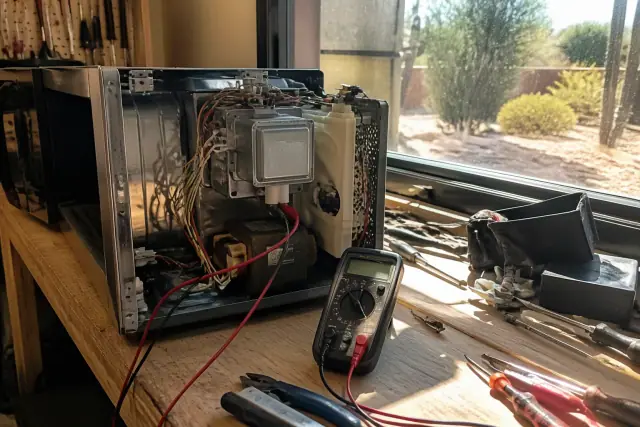
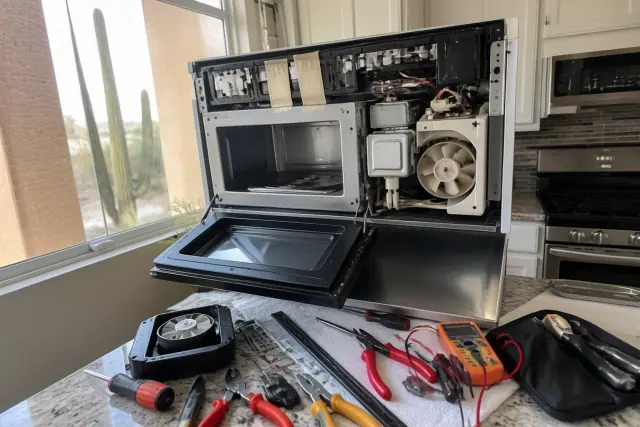
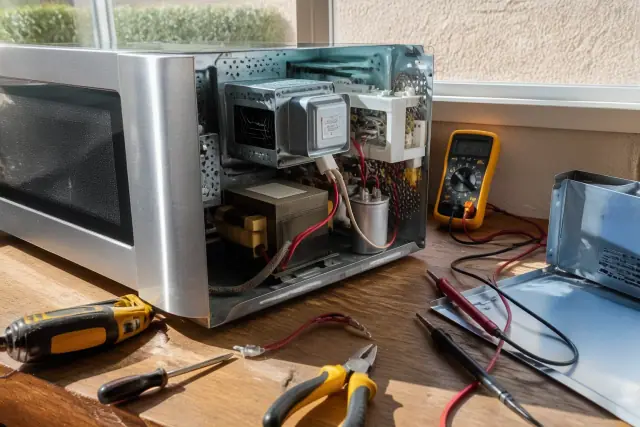
A technician testing the internal components of a disassembled microwave on a workbench in Phoenix, AZ.

A microwave that runs without heating may have a weak magnetron, failed high-voltage diode, or worn door interlock switch. Magnetrons typically provide 8 to 10 years of normal household use before output begins to weaken.

Request Estimate

Power and Door-Switch Repair

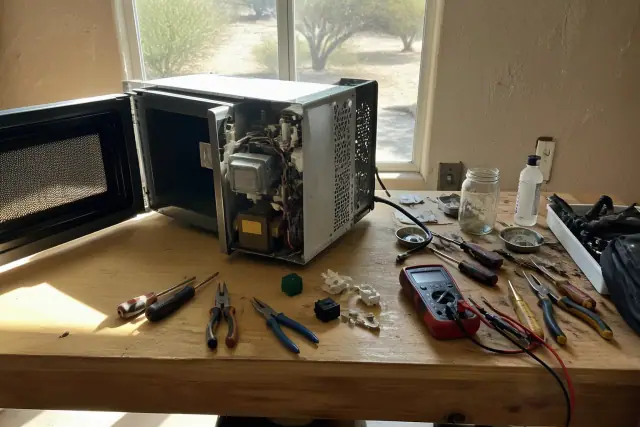
A workbench with disassembled microwave parts and electrical tools during a repair in Phoenix, AZ.

When a microwave will not turn on, we check the thermal fuse, door switches, control board, circuit board, and power supply. Testing identifies whether the shutdown is caused by a protective component, a mechanical interlock, or an electronic fault.

Request Estimate

Sparking and Arcing Inspection

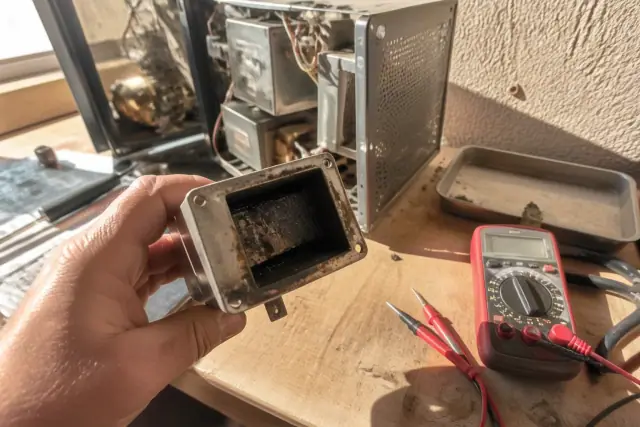
A microwave inspection for sparking and arcing showing charred waveguide residue on a workbench in Phoenix, AZ.

Sparks inside the cavity may come from a damaged waveguide cover, metal contact, or an arcing magnetron. Stop running the microwave until it has been inspected, because continued arcing is a safety concern.

Request Estimate

Turntable and Noise Repair

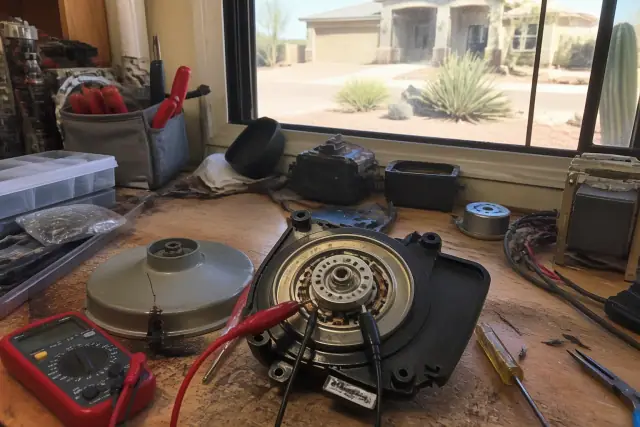
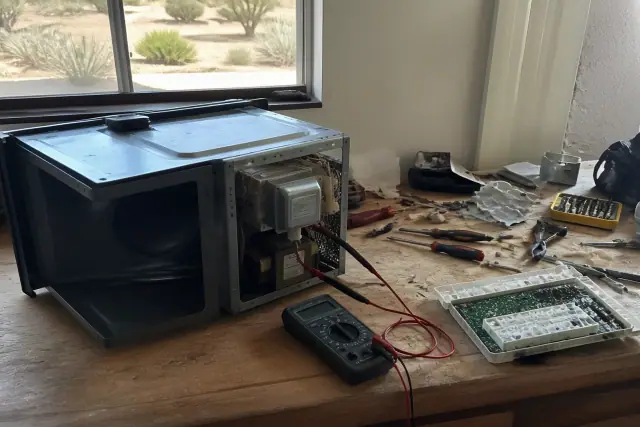
Microwave turntable motor being tested with a multimeter on a cluttered workbench in Phoenix, AZ.

Grinding often points to a worn turntable motor or roller guide, while buzzing can signal stress in the transformer or capacitor. We isolate the sound under controlled testing before recommending a repair.

Request Estimate

Vent Fan and Door-Seal Repair

Technician repairing a microwave vent fan and door seal in a Phoenix, AZ kitchen.

Water or steam around an over-the-range microwave can indicate a worn door seal, condensation buildup, or a failing vent fan. We inspect airflow and the door perimeter to identify where moisture is escaping.

Request Estimate

Control Board and Error-Code Diagnosis

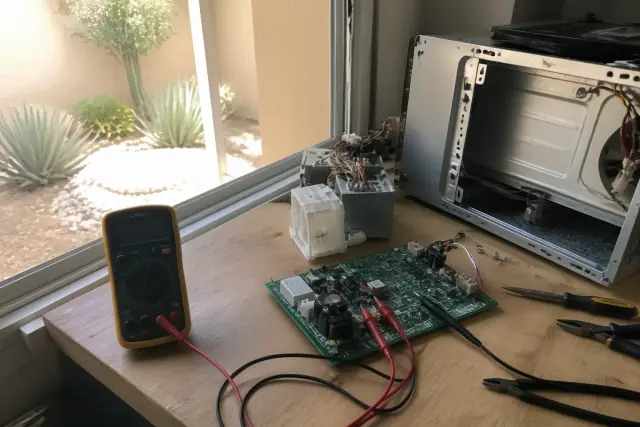
Technician using a multimeter to test a microwave circuit board on a workbench in Phoenix, AZ.

Error codes, dead keys, and erratic operation may trace to the control board, control panel, power supply, or inverter circuit. Brand-specific layouts and electronics are tested before a control component is replaced.

Request Estimate
Microwave Models

Microwave Models We Service

Component layouts, ventilation, access, and replacement economics vary by microwave type. Our technicians work across the model categories commonly found in Phoenix homes and commercial kitchens.

A technician servicing countertop microwaves on a wooden workbench in a Phoenix, AZ workshop.

Countertop Microwaves

Countertop microwaves are straightforward to access, but their lower replacement cost makes an honest repair-or-replace comparison especially important. We diagnose the failure and explain whether the component cost fits the unit's age and value.

  • Magnetron and high-voltage diode testing
  • Thermal fuse and door-switch diagnosis
  • Turntable motor and roller-guide repair
  • Control panel and circuit-board testing
  • Age-and-value repair guidance
Request Estimate
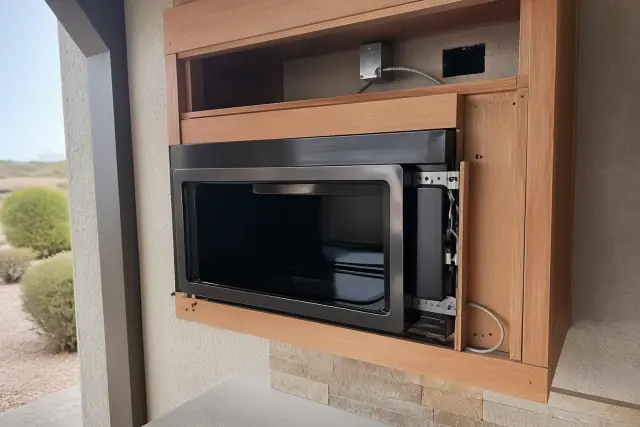
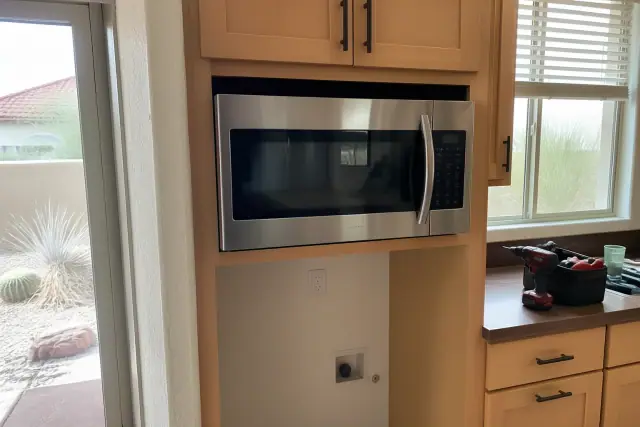
Over-the-range microwave mounted in a wooden cabinet cutout during a repair in Phoenix, AZ.

Over-the-Range Microwaves

Over-the-range models combine microwave operation with kitchen ventilation. Diagnosis covers both cooking performance and the vent, door, and condensation concerns that can affect these units.

  • Vent-fan operation and airflow checks
  • Door-seal and condensation inspection
  • Waveguide-cover and arcing diagnosis
  • Control board and error-code testing
  • Model-matched voltage and wattage parts
Request Estimate
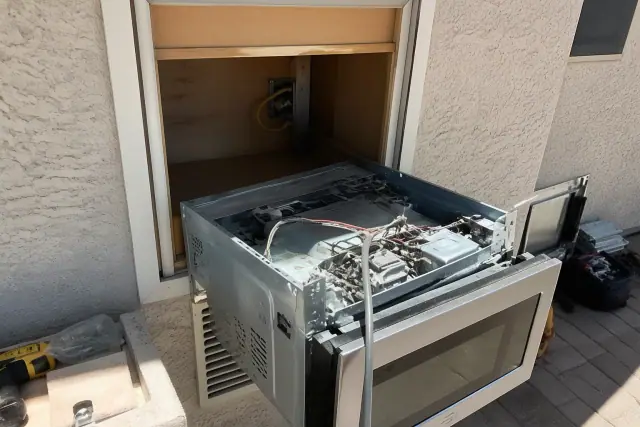
Built-in microwave undergoing repair with exposed wiring in a cabinet cutout at a job site in Phoenix, AZ.

Built-In Microwaves

Built-in microwaves can cost several hundred dollars to replace, so a component-level repair often deserves closer consideration. We evaluate the failed part, repair cost, and remaining useful life before recommending a direction.

  • Magnetron and high-voltage component service
  • Door interlock and latch testing
  • Control-board and inverter diagnosis
  • OEM or OEM-equivalent replacement parts
  • Heating-output and interlock load test
Request Estimate
Residential microwave installed in a kitchen cabinet in Phoenix, AZ.

Residential Microwaves

We service residential microwaves across major manufacturers and common kitchen configurations. A typical household microwave lasts 7 to 10 years, and its age, use, maintenance, and failed component all affect whether repair is worthwhile.

  • Countertop, built-in, and over-the-range units
  • Service across all major manufacturers
  • Door seal, vent, and cavity inspection
  • Heating, power, noise, and control repairs
  • Evening and weekend scheduling options
Request Estimate
Commercial microwave being repaired on a workbench with tools in a Phoenix, AZ workshop.

Commercial Microwaves

Commercial microwaves in restaurants and offices use heavier-duty components and higher-wattage magnetrons. Repair can cost more than residential service because the parts and labor demands are different, so diagnosis and a firm estimate come first.

  • Heavy-use heating performance diagnosis
  • Higher-wattage magnetron testing
  • Door-switch and control-board repair
  • Restaurant and office microwave service
  • Upfront estimate before repair work
Request Estimate
Repair or Replace

Choosing the Right Repair Approach

The right decision depends on the specific failed part, the microwave's age, the cost of a comparable unit, and whether the model is built-in or countertop. We provide the diagnosis and estimate you need to compare repair with replacement on practical terms.

Diagnosis Before Repair

We test the door switches, power supply, circuit board, capacitor, diode, and magnetron output as the symptoms require. That diagnosis identifies the cause before a part is selected.

Safety-First Electrical Work

Our licensed technicians use proper high-voltage capacitor discharge procedures and work to UL 923 microwave safety standards. Electronics servicing is also informed by ISCET- and NASTeC-aligned training and NEMA and IEC household-appliance guidance.

Clear Estimate and Correct Parts

You receive a cost estimate after diagnosis and before the repair starts. When work moves forward, we use OEM or OEM-equivalent parts matched to the model's voltage and wattage specifications.

From Symptom to Cause

Why Choose Us for Microwave Repair?

No heat, a dead display, and unusual noise can each have several possible causes. Our testing connects the symptom to a specific component, then gives you a clear repair cost and a completed-unit load test.

Request Diagnosis

Microwave Not Heating

A unit that runs but leaves food cold may have a failing magnetron, bad high-voltage diode, or worn door interlock switch. We test the heating circuit and interlocks to determine which part is interrupting full power delivery.

Microwave Will Not Start

A blown thermal fuse, tripped door switch, control-board fault, or power-supply problem can leave the microwave completely unresponsive. Circuit and switch testing comes before any replacement recommendation.

Sparking Inside the Microwave

A damaged waveguide cover, metal contact in the cavity, or an arcing magnetron can produce visible sparks. Do not keep running the microwave; leave it off until the cavity and high-voltage system can be inspected.

Grinding or Buzzing Noises

Grinding often comes from the turntable motor or roller guide. A strong buzz can point instead to a stressed transformer or capacitor, which requires controlled electrical testing.

Steam or Condensation Leaks

Moisture collecting around the door can come from a seal issue, while persistent condensation on an over-the-range model may signal a failing vent fan. We inspect both the door perimeter and ventilation path.

Error Codes or Dead Controls

An error code, blank display, or unresponsive keypad can originate in the control panel, board, inverter circuit, or power supply. Manufacturer-specific electronics and layouts make testing essential before ordering a control part.

How It Works

Our Microwave Repair Process

The process moves from symptom review to measured testing, a clear estimate, component repair, and a final operating check. You know the diagnosis and cost before repair work begins.

01.

Describe the Symptoms

Tell us whether the unit will not heat, will not power on, sparks, makes noise, leaks steam, or displays an error code. We schedule the visit around your availability, including evening and weekend options.

02.

Inspect Door and Power Systems

The technician inspects the unit, tests the door switches, and checks the circuit board and power supply. This establishes whether the fault is in a safety interlock, protective fuse, or electronic control.

03.

Test High-Voltage Components

When the symptoms point to the heating circuit, we safely check the high-voltage capacitor and diode and verify magnetron output. Proper capacitor discharge procedures are followed before internal components are handled.

04.

Review the Cost Estimate

Once the failed part is identified, you receive the repair cost before work starts. The estimate makes it possible to compare the repair against the age and price of a comparable replacement.

05.

Complete the Model-Matched Repair

Approved repairs use OEM or OEM-equivalent components rated for the microwave's voltage and wattage. Common magnetrons, door switches, control boards, and turntable motors are stocked to limit return visits.

06.

Run a Final Load Test

Before the visit is complete, we run the repaired unit under load. Heating output, door-interlock function, and control-panel response are checked together.

Restore Your Kitchen Routine

Schedule Your
Microwave Repair
Visit

Request a diagnosis for a microwave that will not heat, start, turn, vent, or respond correctly. Phoenix Appliance Repair Co. will identify the fault, explain the estimate, and test the completed repair before the visit ends.

Microwave Repair Help

Microwave Repair FAQs

Use these answers to compare repair and replacement, understand common faults, and prepare for a microwave diagnosis in Phoenix. For a unit-specific recommendation, the failed component and model condition need to be tested.

Call About Microwave Repair

Often, especially for built-in and over-the-range models that cost several hundred dollars to replace. If the repair is well under half the price of a comparable new unit and the microwave is under 8 years old, repair typically makes financial sense. After diagnosis, we explain when replacement is the smarter choice for an older or heavily damaged unit.

Microwave repair in Phoenix typically costs $100 to $250, depending on the failed part and labor complexity. General appliance repair calls across the Valley average $265 to $288, while appliance-technician labor commonly runs $45 to $120 per hour based on complexity. We provide a firm estimate after inspecting the microwave rather than guessing from the symptom alone.

Common calls involve a microwave that will not heat or power on, sparks inside the cavity, makes grinding or buzzing noises, leaks steam around the door, or shows control errors. These symptoms often trace to the magnetron, door switches, high-voltage capacitor or diode, turntable motor, vent fan, thermal fuse, or control board.

The parts that fail most often include the magnetron, door switches, turntable motor, control panel, capacitor, and high-voltage diode. Door switches wear through repeated mechanical cycling, while heating and control components can weaken or fail electrically. Testing is necessary because several failures can create the same symptom.

Microwave maintenance is limited but useful. Keep the cavity clean, check the door seal for warping, and clear the vent filter on over-the-range models. Schedule an inspection if heating performance changes, new noises develop, or the door no longer latches firmly.

Arizona's Lemon Law provisions apply to motor vehicles, not household appliances. For a microwave, start with the manufacturer's warranty terms; the Arizona Attorney General also accepts consumer complaints involving deceptive or unfair practices in the sale or advertising of goods and services.

Beyond microwaves, Phoenix households often call about refrigerator compressor and seal issues, washer drainage and spin faults, dryer heating-element failures, dishwasher pump problems, and ice-maker faults connected to hard-water conditions. Extreme summer heat can also add strain to appliance compressors and motors across the Valley.

Most residential microwaves last 7 to 10 years before a major component needs attention, although heavy daily use can shorten that window. Built-in and commercial-grade models may last longer with proper care. Keeping the vent and door seal clean helps a unit reach the higher end of its expected life.

Yes. We service countertop, over-the-range, and built-in models from all major manufacturers, including residential and commercial platforms. The diagnosis and repair recommendation account for each model's component layout, wattage, ventilation, age, and replacement value.

The technician inspects the unit, tests the door switches, and checks the circuit board and power supply. When the symptom involves heating, the high-voltage capacitor and diode are checked and magnetron output is verified. You then receive the diagnosis and cost estimate before repair begins.

No. Sparking may come from a damaged waveguide cover, metal contact, or an arcing magnetron, and the microwave should remain off until inspected. Continuing to operate it can worsen the arcing and the underlying safety issue.

Same-day service is available for many common electrical and mechanical microwave faults, and evening and weekend appointments are offered. Frequently failing parts are stocked so most of those faults can be diagnosed and repaired in a single visit.

We use OEM or OEM-equivalent parts rated to match the microwave's model, voltage, and wattage specifications. Common stocked components include magnetrons, door switches, control boards, and turntable motors.