Proudly serving Phoenix, Glendale, Scottsdale, Tempe, Mesa, Chandler & surrounding areasCall or Text 24/7: 480-243-9053

Stove, Range & Cooktop Repair, Burner Maintenance & Ignition Troubleshooting in Phoenix, AZ

Phoenix Appliance Repair Co. repairs stoves, ranges, ovens, and cooktops for homes across Phoenix, Arizona. Our technicians diagnose gas burners, electric coil and radiant elements, convection ovens, self-cleaning systems, and electronic controls. Related problems can be evaluated during the same visit, so a burner fault and an oven issue do not require separate appointments.

Phoenix summers can push outdoor temperatures past 110°F for weeks at a stretch, while monsoon dust and dry desert air add wear around igniters, valves, and older burner assemblies. Accurate testing matters because a failed element, switch, sensor, control board, or supply connection can produce the same no-heat symptom. For gas work, we follow National Fuel Gas Code (NFPA 54) guidance and test repaired connections for leaks. You receive diagnostic pricing before work begins and a repair quote before you commit.

Technicians train on factory service procedures for the major manufacturers we work on daily. Common igniters, thermostats, burner coils, and control boards are carried on the truck to close out most repairs in a single visit.

Phoenix Appliance Repair Co. provides stove and range repair in Phoenix, Scottsdale, Tempe, Mesa, Chandler, Glendale, and the broader Phoenix metro area.

★ ★ ★ ★ ★4.9/5 Average Rating · 20+ Years of Experience · Thousands of Customers Helped · Licensed & Insured · Residential & Commercial

Phoenix Stove & Range Repair Benefits

What Does Stove & Range Repair Cover?

Stove and range repair covers gas burners, electric coil and radiant elements, oven heating systems, cooktop surfaces, controls, wiring, and related safety components. Service includes standing-pilot and electronic-ignition gas ranges as well as electric, convection, and self-cleaning models.

A structured diagnosis separates an appliance failure from a supply problem. Technicians test igniters, elements, sensors, switches, boards, terminal connections, and the dedicated 240-volt circuit as the symptoms require.

The Phoenix metro area is home to over 5.19 million residents, with kitchens that range from older standing-pilot equipment to modern electronic controls. Testing the full system helps identify the failed component before parts are replaced.

Benefits of Professional Diagnosis

Systematic testing narrows the problem before a replacement part is recommended. It also brings gas connections, electrical supply, temperature accuracy, and component operation into the same repair decision.

  • Continuity and resistance testing for electric elements
  • Calibrated-probe checks against the oven control setpoint
  • Leak testing with a manometer and soap solution after gas repairs
  • NFPA 54 guidance for gas connections, burners, and valves
  • Checks of the 240-volt circuit, range cord, and terminal block
  • Common igniters, thermostats, coils, and control boards carried on the truck
  • A repair quote after diagnosis and before work begins
  • Repair-or-replace guidance based on age, scope, cost, and parts availability
Stove & Range Services

Stove & Range Repair Services

Repair service covers fuel, heat, ignition, temperature, door, control, and wiring failures across the range. Each category starts with testing aimed at the symptom rather than replacing parts by appearance or guesswork.

Gas Stove & Range Repair

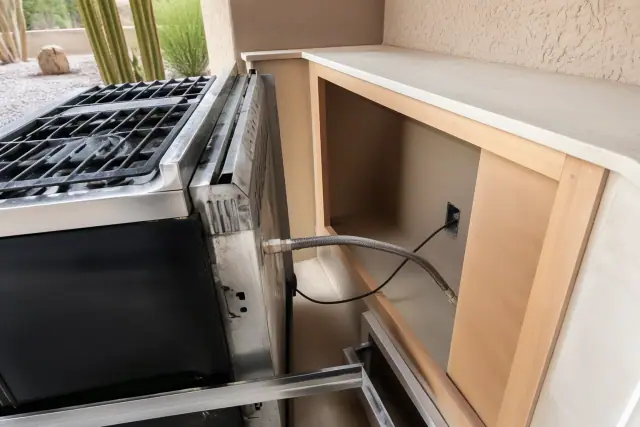
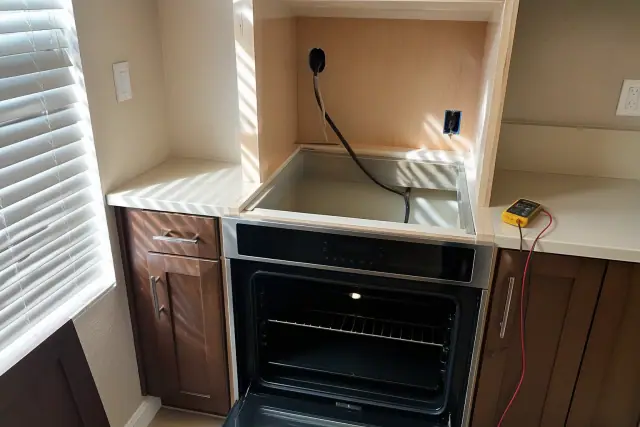
A gas stove pulled out for repair, showing a gas line and electrical cord at a home in Phoenix, AZ.

Gas service covers standing pilots, electronic ignition, sealed burners, igniters, thermocouples, spark modules, regulators, and gas valves. Connections are checked after repair, while clogged ports, weak sparks, and burner assemblies exposed to years of grease or desert dust are evaluated at the component level.

Request Estimate

Electric Range & Cooktop Repair

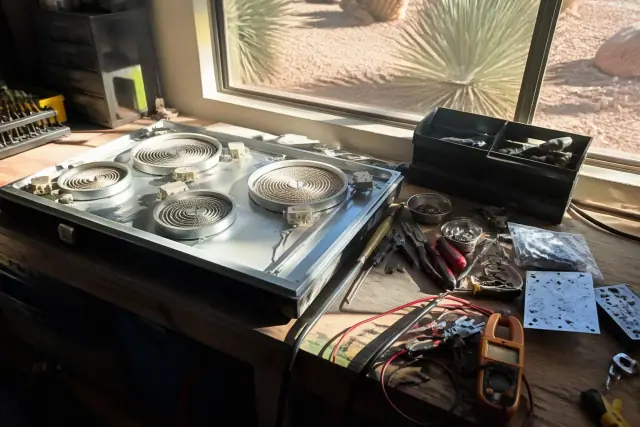
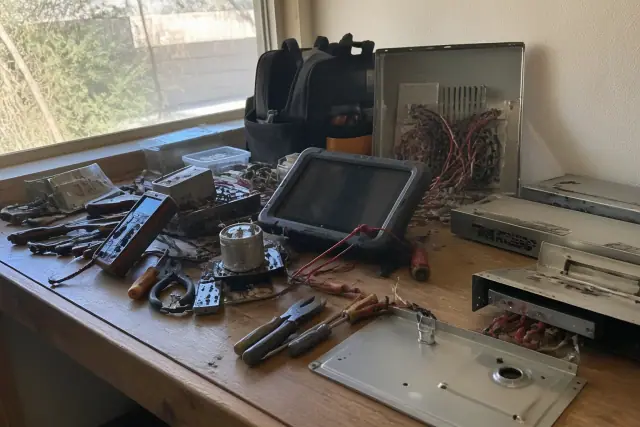
Stove and cooktop repair tools on a workbench in a Phoenix, AZ workshop.

Electric range repair includes coil and radiant elements, infinite switches, surface wiring, smooth-top glass, cooktop seals, and the control path feeding each burner. Continuity and resistance tests distinguish a failed element from a switch, relay, wiring, or 240-volt supply problem.

Request Estimate

Oven Temperature & Heating Repair

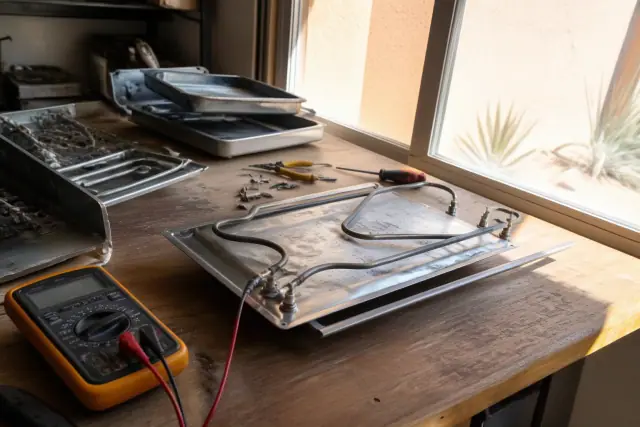
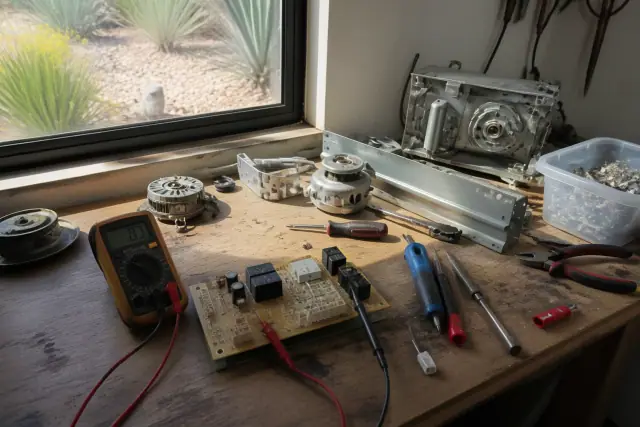
Technician using a multimeter to test a stove heating element on a wooden workbench in Phoenix, AZ.

Oven service addresses bake and broil elements, thermostats, temperature sensors, high-limit switches, relays, and convection fan motors. A calibrated probe confirms temperature drift of 25 to 50 degrees, while separate bake and broil tests locate no-heat faults that are especially common on ranges seven to twelve years old.

Request Estimate

Burner & Ignition Repair

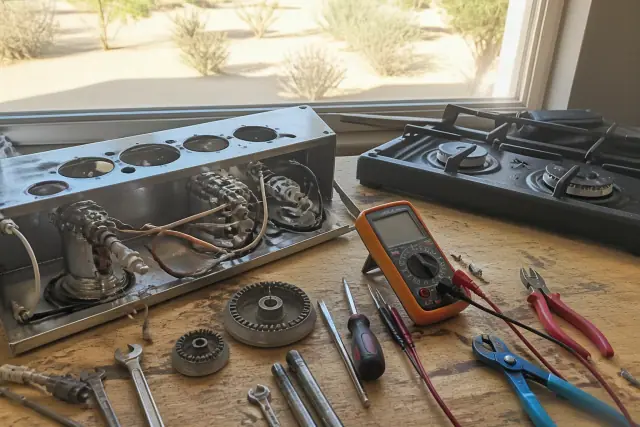
Technician testing stove range burner and ignition components with a multimeter at a workbench in Phoenix, AZ.

A dead burner is checked at the switch, element or igniter, and wiring harness before a part is selected. On gas cooktops, moisture, food debris, a misaligned igniter, weak flame sensor, or fouled spark module can make one burner fail or cause every burner to click continuously; multi-burner electric failures may trace to one shared control board rather than four separate parts.

Request Estimate

Oven Door, Hinge & Seal Repair

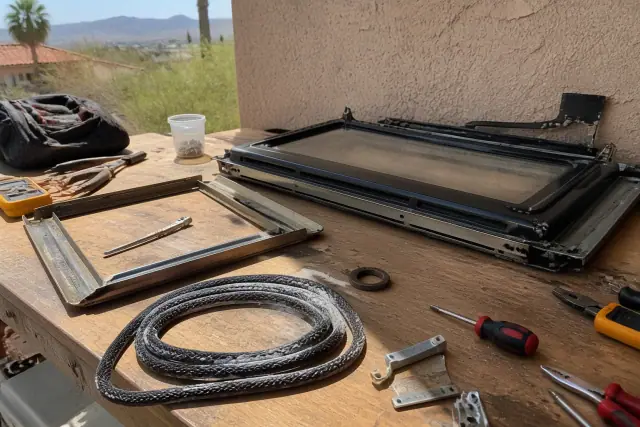
Technician repairing an oven door hinge and seal on a workbench in Phoenix, AZ.

Worn hinges, misaligned doors, damaged gaskets, and warped rack guides can let heat escape or make the oven harder to use. Service includes hinge, door seal, gasket, and oven rack replacement when those parts are responsible for the problem.

Request Estimate

Controls, Wiring & Power Diagnostics

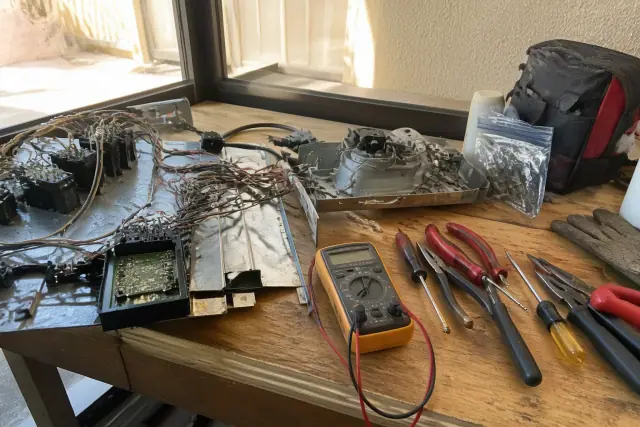
Technician performing electrical and wiring diagnostics on a stove range at a workbench in Phoenix, AZ.

Control boards, relays, terminal blocks, cords, loose neutrals, and upstream power faults can mimic failed burners or elements. When the clock and controls are also dead, the breaker, dedicated circuit, cord, and power block are checked before internal appliance parts are condemned.

Request Estimate
Repair Options

Diagnostic & Component Repair Options

Fuel type, cooking technology, manufacturer design, appliance age, and repair economics all shape the right recommendation. These repair categories show how service is matched to the equipment and the failure found during testing.

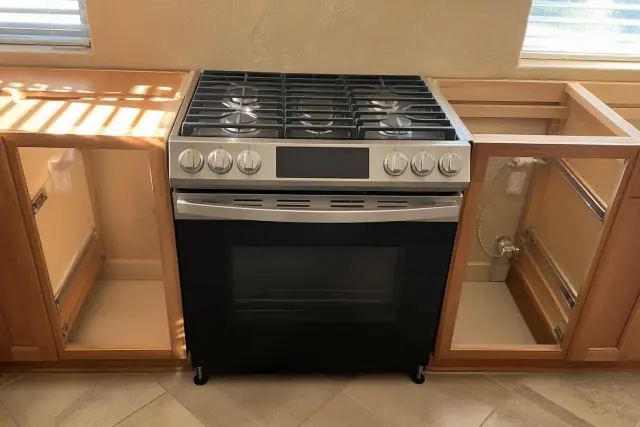
Gas range installed in a kitchen cabinet cutout in Phoenix, AZ, showing connection hoses and leveled positioning.

Gas Range Systems

Older Phoenix homes may still use standing-pilot ranges, while newer kitchens commonly rely on electronic ignition and sealed burners. A range that has gone five or more years without service may also show grease-clogged ports or corrosion around an older burner assembly.

  • Standing-pilot cleaning and adjustment
  • Electronic igniter and spark-module testing
  • Sealed-burner and burner-port service
  • Regulator, manifold, and gas-valve diagnosis
  • Thermocouple and flame-sensor checks
Request Estimate
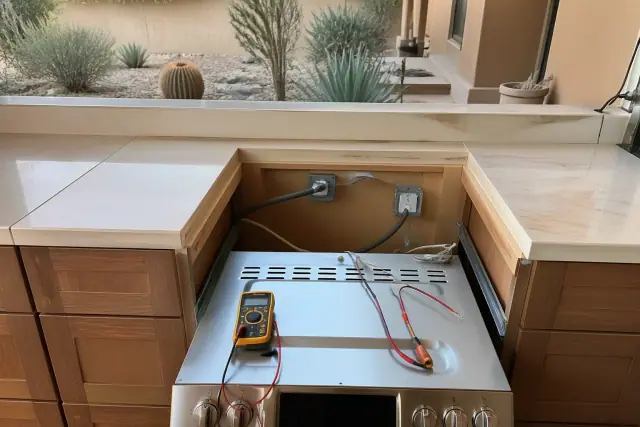
Stove range repair with testing probes in a kitchen cabinet cutout at a home in Phoenix, AZ.

Electric Range & Cooktop Systems

Electric heat depends on the element, switch, internal wiring, control board, and power supply working as a chain. Smooth-top moisture intrusion, a blistered coil, a failed switch, or a burned terminal can interrupt that chain at different points.

  • Removable coil-burner testing and replacement
  • Radiant surface-element diagnosis
  • Smooth-top glass and cooktop-seal evaluation
  • Burner-switch, relay, and wiring checks
  • Range cord, terminal block, and 240-volt supply testing
Request Estimate
Convection and self-cleaning oven being installed in a custom cabinet cutout in Phoenix, AZ.

Convection & Self-Cleaning Ovens

Convection and self-cleaning ovens add fan motors, electronic cooking modes, high-limit controls, and door-lock hardware to the basic heating system. The high-heat cleaning cycle can place extra stress on elements, locks, and insulation compared with normal baking.

  • Bake and broil element testing
  • Convection fan-motor service
  • Thermostat, sensor, and calibration checks
  • Self-clean door-lock diagnosis
  • Door hinge, gasket, and rack service
Request Estimate
Technician's workbench with stove range repair tools and diagnostic equipment in Phoenix, AZ.

Manufacturer-Specific Diagnostics

Ignition systems, error codes, boards, elements, and sealed-burner assemblies vary by manufacturer. Technicians use factory service procedures to interpret those differences rather than treating every range as the same design.

  • Samsung and LG electronic controls and cooking modes
  • Whirlpool and Frigidaire igniters, elements, and seals
  • Viking heavy-duty sealed burners and gas valves
  • GE control boards, igniters, and thermostat calibration
  • Maytag and Amana burner, igniter, and board components
Request Estimate
Technician using a multimeter on a stove range control board at a workbench in Phoenix, AZ.

Repair-or-Replace Evaluation

Simple knob, hinge, or igniter repairs often run a couple hundred dollars and take one visit, while gas valves and control boards sit toward the higher end because of part cost and diagnostic complexity. An honest recommendation accounts for the failed part, range age, available parts, labor, and replacement cost.

  • Compare the confirmed repair with the cost of replacement
  • Apply the 50 percent rule when age and repair cost both point toward replacement
  • Remember that most stoves and ovens serve for at least 15 years with normal use
  • A seven-year-old oven with one failed part is usually worth repairing
  • Multiple failing systems or unavailable parts can change the recommendation
Request Estimate
Service Built Around Diagnosis

Why Choose Our Repair Approach

The right repair starts with the fuel type, exact symptom, component test results, and appliance age. Phoenix Appliance Repair Co. combines safety checks, manufacturer procedures, and clear pricing so the recommendation is tied to the actual failure found.

Code-Conscious Gas Safety

Gas connection, burner, and valve work follows NFPA 54 guidance and Arizona Registrar of Contractors standards for residential appliance service. Repaired connections are checked with a manometer and soap solution instead of being assumed leak-free.

Test-First Diagnostics

Elements are tested for continuity and resistance, oven temperature is checked with a calibrated probe, sensors are compared with manufacturer specifications, and supply connections are inspected before parts are condemned. Diagnostic pricing is provided before work begins, followed by the repair cost after the problem is identified.

Common Parts on the Truck

Common igniters, thermostats, burner coils, and control boards travel with the technician. Combined with training on factory service procedures for the major manufacturers serviced daily, that stock helps close out most repairs during a single visit.

Common Failure Signs

Common Stove & Range Problems

Different failures can produce the same symptom, so the pattern matters: one burner or several, gas or electric, intermittent or completely dead, heat loss or inaccurate temperature. A structured diagnosis follows that pattern from the supply connection through the controls and final component.

Request Diagnosis

Burner Clicks but Will Not Light

A dirty or misaligned igniter commonly causes clicking without ignition. Moisture or food debris can also reach the spark module, while a burner that lights and goes out may point to a weak flame sensor or thermocouple.

Burner or Oven Will Not Heat

A failed coil, radiant element, bake element, broil element, switch, relay, or wiring connection can all stop heat. Testing the element and its control path separately keeps a healthy-looking but internally failed part from being confused with a board or supply fault.

Oven Temperature Drifts

An oven running 25 to 50 degrees away from its dial setting may need calibration, a thermostat, or a temperature sensor. Actual cavity temperature is compared with the control setpoint using a calibrated probe rather than relying only on the built-in display.

Range Has No Power

When the clock, controls, burners, and oven are all dead, the cause may sit upstream of the appliance. A tripped breaker, loose neutral, burned terminal, damaged range cord, or fault on the dedicated 240-volt circuit is checked before an internal control board is blamed.

Door Sags or Leaks Heat

Years of daily use can wear hinges or pull an oven door out of alignment. A sagging door, damaged seal, or worn gasket lets heat escape and can force longer cooking cycles; warped rack guides can add another usability problem.

Gas Valve or Shutoff Trouble

A burner that will not ignite or will not shut off completely may involve the valve, regulator, manifold, or ignition system. Because loose fittings, cracked manifolds, and improperly adjusted regulators can create gas or carbon monoxide risks, connection and leak testing are part of the repair.

How It Works

Our Stove & Range Repair Process

The process moves from the reported symptom to supply checks, component testing, a clear diagnosis, an upfront repair decision, and final verification. Gas and electric ranges follow different safety checks, but both receive test-first troubleshooting.

01.

Describe the Symptoms

Start with what the range is doing: one dead burner, continuous clicking, inaccurate oven heat, a dark display, a loose door, or a burner that will not shut off. The symptom and fuel type focus the initial checks.

02.

Check Gas or Electrical Supply

Gas connections, regulators, and ignition supply are reviewed on gas equipment. Electric ranges receive breaker, circuit, cord, terminal-block, and neutral checks so a supply fault is not mistaken for an appliance failure.

03.

Test the Suspected Components

The suspected igniter, element, switch, sensor, thermostat, relay, board, or harness is tested with the method appropriate to the part. Elements are checked for continuity and resistance, sensors against manufacturer specifications, and oven heat with a calibrated probe.

04.

Review the Diagnosis & Price

Once the cause is identified, the repair cost is quoted before work begins. Age, part availability, repair scope, and replacement cost are discussed when the 50/50 decision is relevant.

05.

Complete the Approved Repair

After approval, the failed component or connection is repaired according to the range design. Common truck stock such as igniters, thermostats, burner coils, and control boards helps complete most repairs without a separate parts visit.

06.

Verify Operation & Safety

Repaired burners and controls are tested for normal operation. Gas connections receive leak checks, while oven work can be verified against the control setpoint and electric work through the affected element and circuit path.

Get Cooking Again

Schedule Stove & Range
Repair

Tell Phoenix Appliance Repair Co. whether the problem involves a gas burner, electric element, oven temperature, door, display, or cooktop. We will diagnose the cause, explain the repair, and provide the price before approved work begins.

Stove & Range Help

Stove & Range Repair FAQs

These answers cover Phoenix repair costs, common gas and electric failures, appliance age, brands, and service coverage. A diagnosis is still needed to identify the exact part and quote a specific repair.

Call Our Experts

Nationally, stovetop repairs typically cost $100 to $400 including parts and labor, and a straightforward repair averages around $179. Oven repairs commonly run $125 to $350, while Phoenix-area appliance calls average roughly $265 to $290 after diagnostic time, parts, and labor. Phoenix Appliance Repair Co. quotes the specific repair after diagnosis and before work begins.

In many cases, yes. Most stoves and ovens provide at least 15 years of service with normal use, and a single failed igniter, element, sensor, or board can cost less to repair than replacing the range. Age, repair scope, parts availability, and the 50 percent rule should all inform the decision.

A seven-year-old oven is generally less than halfway through an expected service life of around 15 years or more. When one component such as an element, thermostat, igniter, or door seal has failed, repair usually costs less than replacing the appliance. Multiple failing systems or unavailable parts can change that recommendation.

The 50/50 rule says replacement generally makes more sense when an appliance is past 50 percent of its expected lifespan and the repair exceeds 50 percent of a new replacement's cost. If the range is younger or the repair is below half the replacement cost, repair is usually the better value. A confirmed diagnosis is needed before applying the rule.

The two common categories are failed heating elements and faulty switches or control boards that stop power from reaching a burner or oven cavity. Both can look like the same no-heat problem from the outside. Continuity testing and control-output checks identify which side has actually failed.

Common repairs involve igniters, heating elements, thermostats, temperature sensors, door seals, hinges, burner switches, wiring, and control boards. Gas ranges also develop clogged burner ports and valve issues, while electric ranges see more element and terminal failures. Phoenix heat, monsoon dust, grease, and moisture after spills can add wear around those components.

Electricians typically handle the circuit, outlet, panel connection, and other wiring that feeds the range. Appliance repair technicians work on internal components such as igniters, elements, sensors, switches, and control boards. If diagnosis points to the home's electrical supply rather than the appliance, Phoenix Appliance Repair Co. will identify that boundary instead of attempting work outside its scope.

A dirty or misaligned igniter is a common cause, but moisture, food debris, a cracked ceramic igniter, or a spark-module problem can produce similar clicking. Each igniter should be cleaned and tested individually. A burner that lights and then goes out may instead involve the flame sensor or thermocouple.

Temperature drift in that range can come from calibration, a thermostat, a temperature sensor, or a control issue. The cavity temperature should be measured with a calibrated probe and compared with the setpoint. That result determines whether recalibration or component replacement is appropriate.

When the clock, controls, burners, and oven are all dead, the breaker, dedicated 240-volt circuit, range cord, terminal block, and neutral connection should be checked first. A tripped breaker or burned terminal can mimic a failed control board. The appliance is opened only after the supply path has been considered.

Yes. The service covers standing-pilot and electronic-ignition gas ranges, coil and radiant electric ranges, smooth-top cooktops, convection ovens, and self-cleaning systems. The diagnostic method changes with the fuel type and the controls built into the appliance.

Phoenix Appliance Repair Co. services Samsung, Whirlpool, Viking, GE, LG, Frigidaire, Maytag, and Amana ranges. Brand-specific work can involve digital error codes, electronic controls, bake elements, igniters, sealed-burner gaskets, gas valves, convection fans, thermostats, and door seals. Technicians train on factory service procedures for the major manufacturers they work on daily.

Phoenix Appliance Repair Co. provides stove and range repair in Phoenix, Scottsdale, Tempe, Mesa, Chandler, Glendale, and the broader Phoenix metro area. Service is for homes with gas ranges, electric ranges, cooktops, and oven systems covered on this page.