The Oven Will Not Heat
The most common failure is an oven that stays cold, stalls below about 200 degrees, or heats far beyond its setting. Electric models usually point to a bake or broil element, while gas models more often point to the igniter.
At Phoenix Appliance Repair Co., heating failure is the most common oven problem reported by homes and restaurants across the Salt River Valley. A cold oven, slow preheating, or inaccurate temperature usually points to a failed heating element, gas igniter, or temperature sensor. Identifying the symptom and failed component helps determine whether a focused repair makes more sense than replacement.
The most common failure is an oven that stays cold, stalls below about 200 degrees, or heats far beyond its setting. Electric models usually point to a bake or broil element, while gas models more often point to the igniter.
An electric element that never glows orange may be burned out. A healthy gas igniter should draw enough current to open the safety valve in under 90 seconds; a long glow without ignition suggests a weak or cracked igniter.
A proper diagnosis compares element resistance, igniter amperage, and sensor readings with the manufacturer's specifications. Once correctly diagnosed, a temperature sensor replacement is usually completed in under an hour, and many single-part repairs can be finished in one appointment.
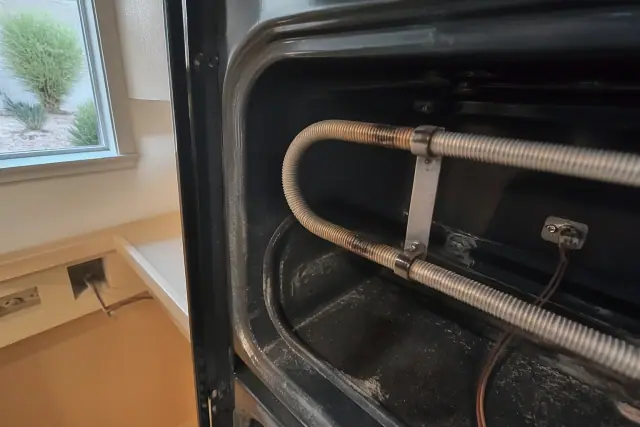
An electric element with the blister, split, or arcing spot that repeated thermal cycling can leave behind. Visible coil damage helps distinguish an element failure from a hidden sensor or control fault.
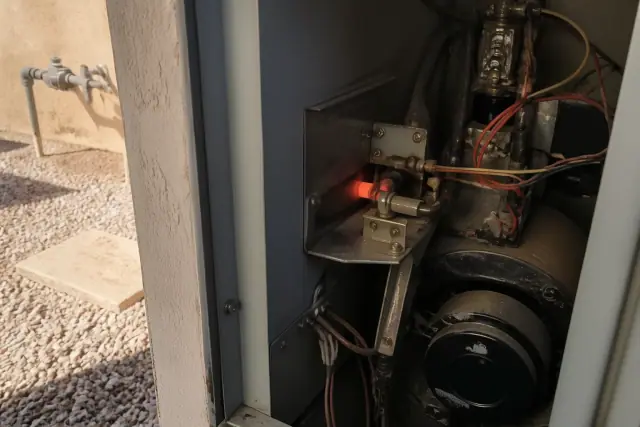
An igniter glowing while the burner still has not lit. The delay matters because a weak igniter may fail to open the gas safety valve and can allow unburned gas into the cavity.
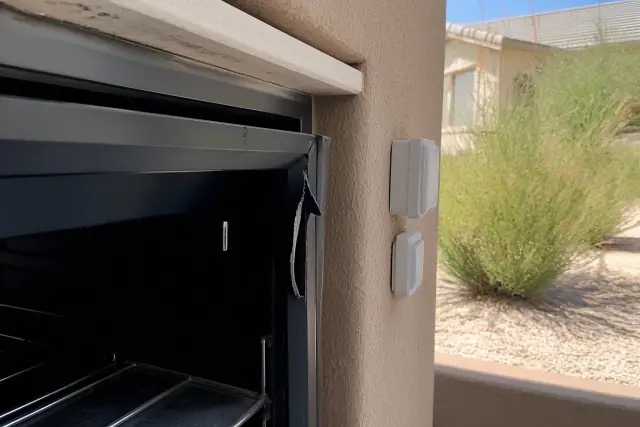
A door that does not close fully, a torn gasket, and condensation on the glass. Escaping heat forces longer run times and can produce uneven baking.
Heating that swings 20 to 30 degrees from the set point usually directs attention to the temperature sensor, which tells the control board when to cycle power.
Self-cleaning cycles typically reach 800 to 900 degrees, accelerating wear on gaskets, latches, and electronics. Phoenix summer heat, monsoon humidity, and power flickers can add strain to seals, igniters, clocks, and control boards.
A 7-year-old oven with one failed part is roughly halfway through the expected life of an electric model, so repair is usually the practical choice.
Repair math generally favors fixing the oven when the work costs less than 50 percent of a comparable replacement. Multiple simultaneous failures or an expensive control board on an older model can change that decision.
| Repair | Typical Cost | Repair Outlook |
|---|---|---|
| Igniter replacement | $150-$250 | Usually worth repairing |
| Heating element | $150-$300 | Usually worth repairing |
| Temperature sensor or thermostat | $150-$300 | Usually worth repairing |
| Door seal or gasket | $100-$200 | Usually worth repairing |
| Control board | $300-$600 | Decide case by case |
Ovens can also develop light, clock, control-panel, convection-fan, latch, and door-seal problems. Heating failure remains the most common issue because an open element, weak igniter, inaccurate sensor, or failed control relay can stop the cooking cycle even while other parts of the range still work.
The failed component, oven age, repair cost, part availability, and number of affected systems all matter. A single igniter, element, sensor, or gasket failure usually favors repair, while an older, harder-to-source model with control-board trouble or several failures may be a better replacement candidate.
How do you know an oven is going bad? Look for uneven baking, undercooked centers with burnt edges, longer preheating, unexplained burning smells, visible element damage, or shutdowns during a cooking cycle. Gas ovens often last a few years longer than electric ovens because they have fewer electrical heating components, but usage, self-cleaning habits, and timely maintenance affect both types.
Share what the oven is doing, when the symptom began, and whether the stove top still works. A same-day diagnostic visit can confirm the failed component and may allow a single-part repair to be completed during the same appointment.